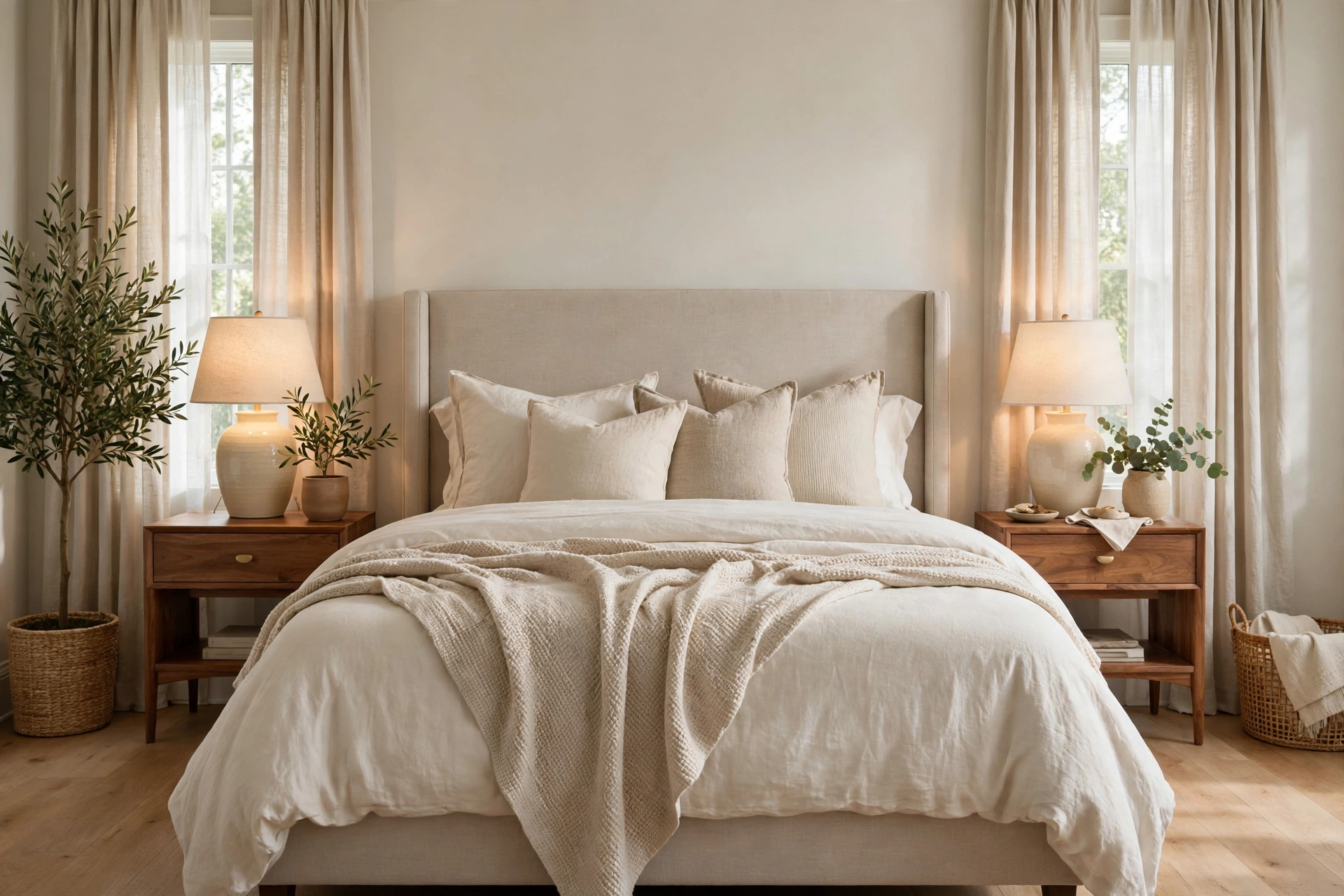
A bedroom doesn’t need designer furniture, expensive wallpaper, or a complete renovation to feel beautiful. Sometimes, the difference between an ordinary room and one that feels thoughtfully designed comes down to a few well-chosen details: soft lighting, inviting bedding, balanced colors, and furniture that works with the space rather than against it.
The best cozy bedroom ideas combine comfort with a little intention. Think natural textures, layered fabrics, warm colors, uncluttered surfaces, and details that make you want to slow down at the end of the day.
Whether you’re decorating a small apartment bedroom, refreshing your primary bedroom, or working with a limited budget, these 27 ideas will help you create a space that feels polished, welcoming, and personal without spending more than you need to.
1. Layer Your Bedding in Soft, Complementary Textures
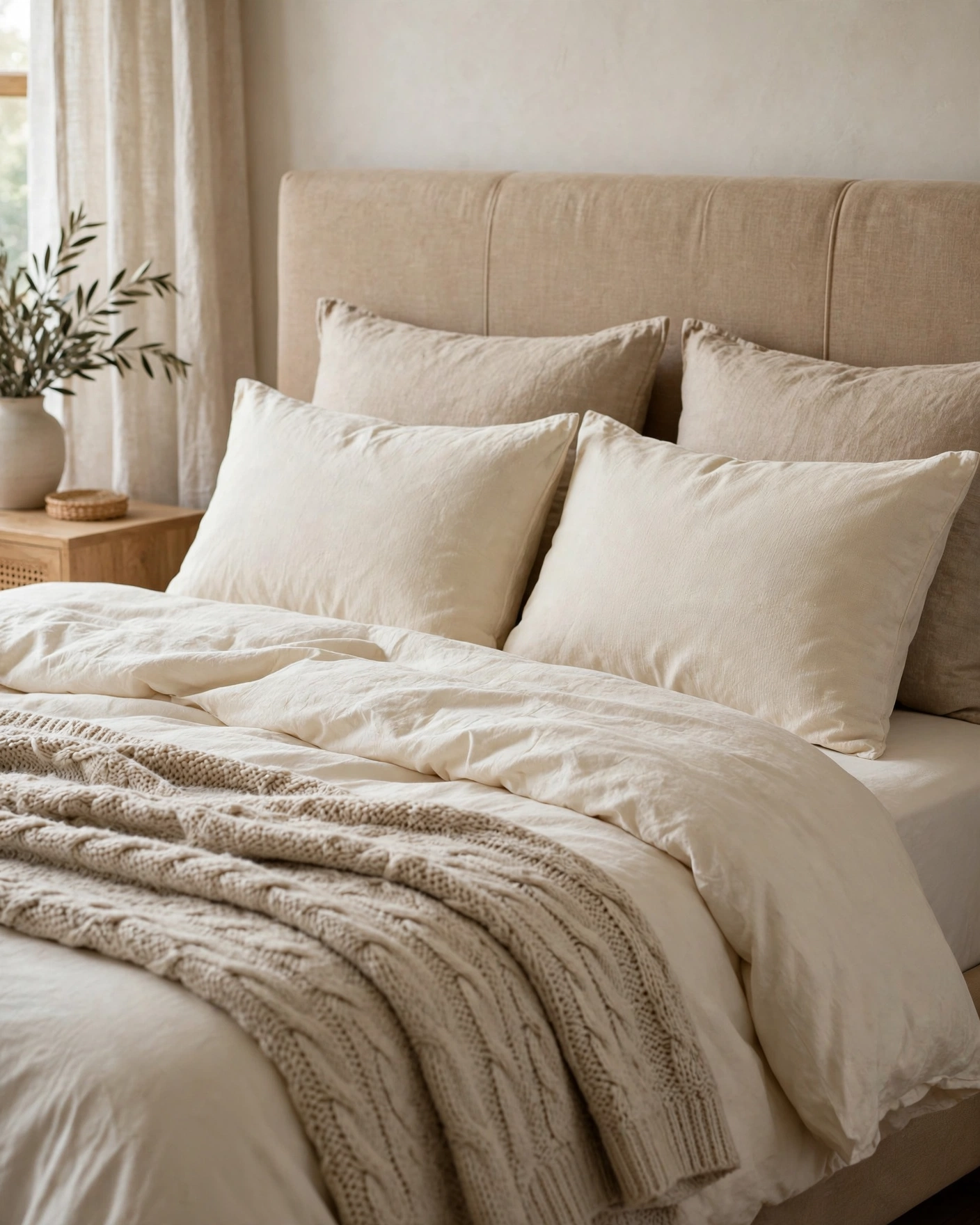
One of the simplest ways to make a bedroom feel more luxurious is to give the bed a little depth. Instead of relying on a single comforter and two pillows, combine a fitted sheet, a duvet or comforter, sleeping pillows, decorative pillows, and a lightweight throw.
Choose two or three complementary textures, such as cotton, linen, and a soft knit. A restrained palette of ivory, oatmeal, warm beige, or soft gray helps the different layers feel cohesive.
You don’t need a dozen decorative pillows. A few well-proportioned pieces are usually easier to maintain and look more intentional.
Try this: Start with bedding you already own, then add one textured throw and a pair of coordinating pillow covers.
2. Choose a Warm, Neutral Color Palette
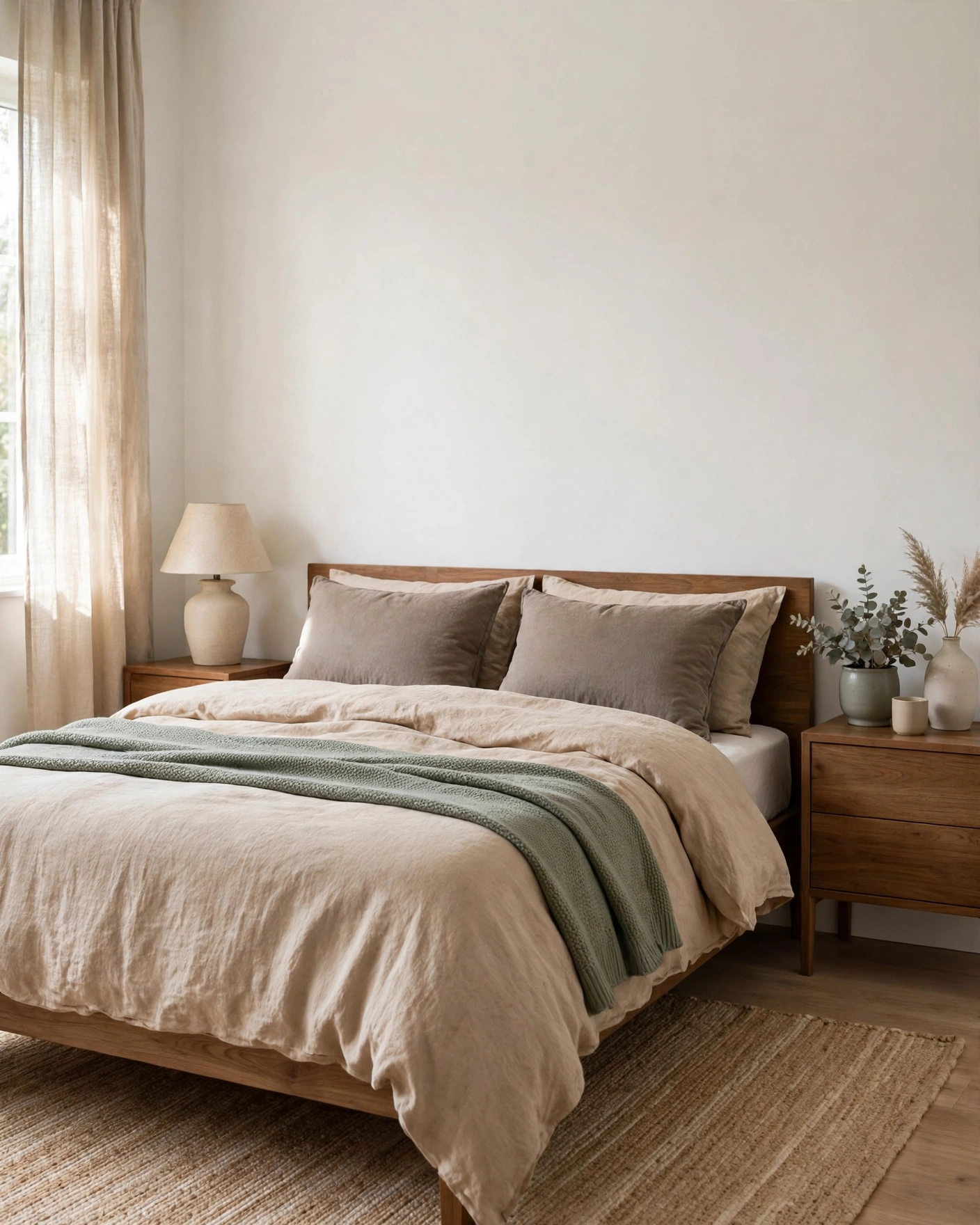
A warm neutral palette can make a bedroom feel calm and considered. Cream, sand, taupe, mushroom, warm gray, and muted brown work particularly well together because they create subtle contrast without making the room feel busy.
The trick is to use more than one shade. If every surface is exactly the same beige, the room can look flat. Combine a lighter wall color with slightly deeper bedding, wood accents, and darker details for definition.
If you prefer color, introduce muted sage, dusty blue, terracotta, or olive through smaller pieces that can be changed later.
Try this: Pick one main neutral, one complementary shade, and one darker accent. Repeat those colors in at least three places around the room.
3. Upgrade Your Bedside Lighting
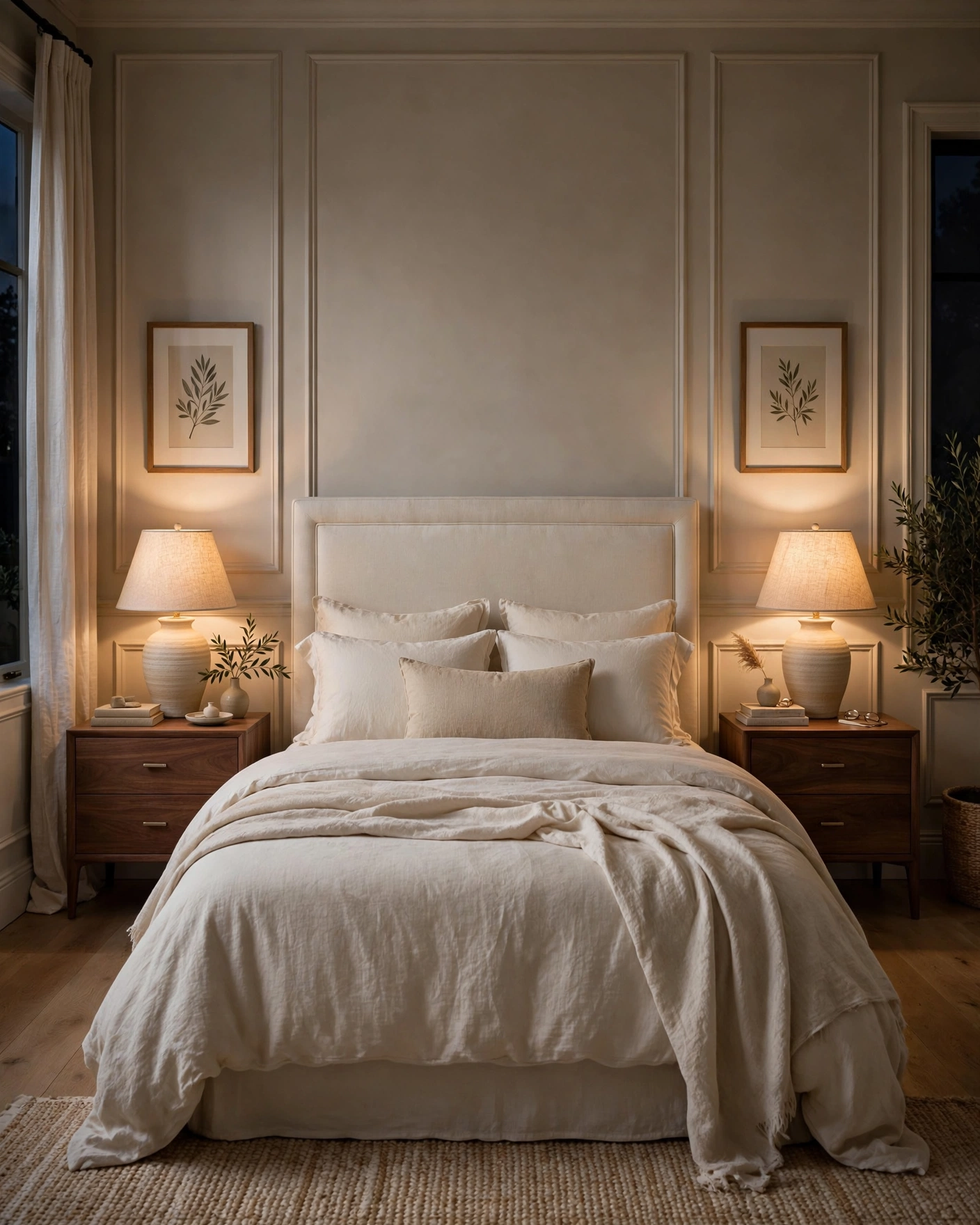
Lighting has a huge influence on how a bedroom feels after sunset. A bright overhead fixture can be useful for cleaning or getting dressed, but it often isn’t the most relaxing choice for winding down.
Add bedside lamps with warm-white bulbs, ideally around 2700K for a soft evening glow. Lamps with fabric shades, ceramic bases, or simple metal finishes can also introduce texture without overwhelming the decor.
If your nightstands are small, consider wall-mounted sconces or adjustable reading lights. They free up surface space while keeping light where you need it.
Try this: Use bedside lighting for your evening routine and reserve the overhead light for tasks that need stronger illumination.
4. Hang Curtains Higher and Wider
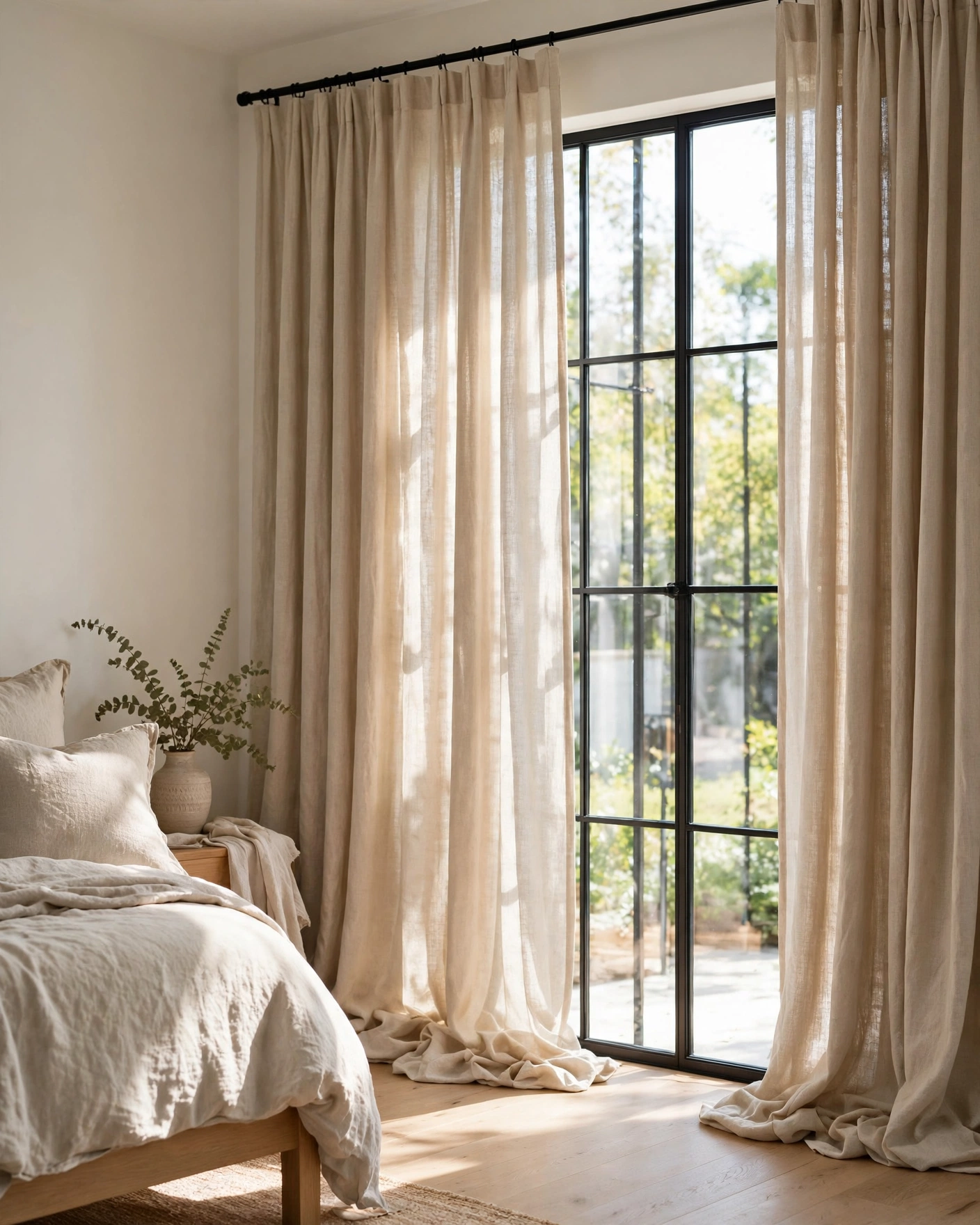
Curtains can change the proportions of a bedroom. Hanging the curtain rod a little above the window frame and extending it beyond the window on both sides can make the window feel larger and allow more daylight into the room when the curtains are open.
Choose a fabric that suits your needs. Linen-look curtains create a relaxed, airy effect, while heavier lined curtains can provide more privacy and light control.
Measure before buying. Panels that are too short or barely cover the window often make a room feel unfinished.
Try this: Where the wall and window layout allow, position the rod closer to the ceiling and extend it beyond the frame without blocking important architectural features.
5. Add a Large, Soft Area Rug
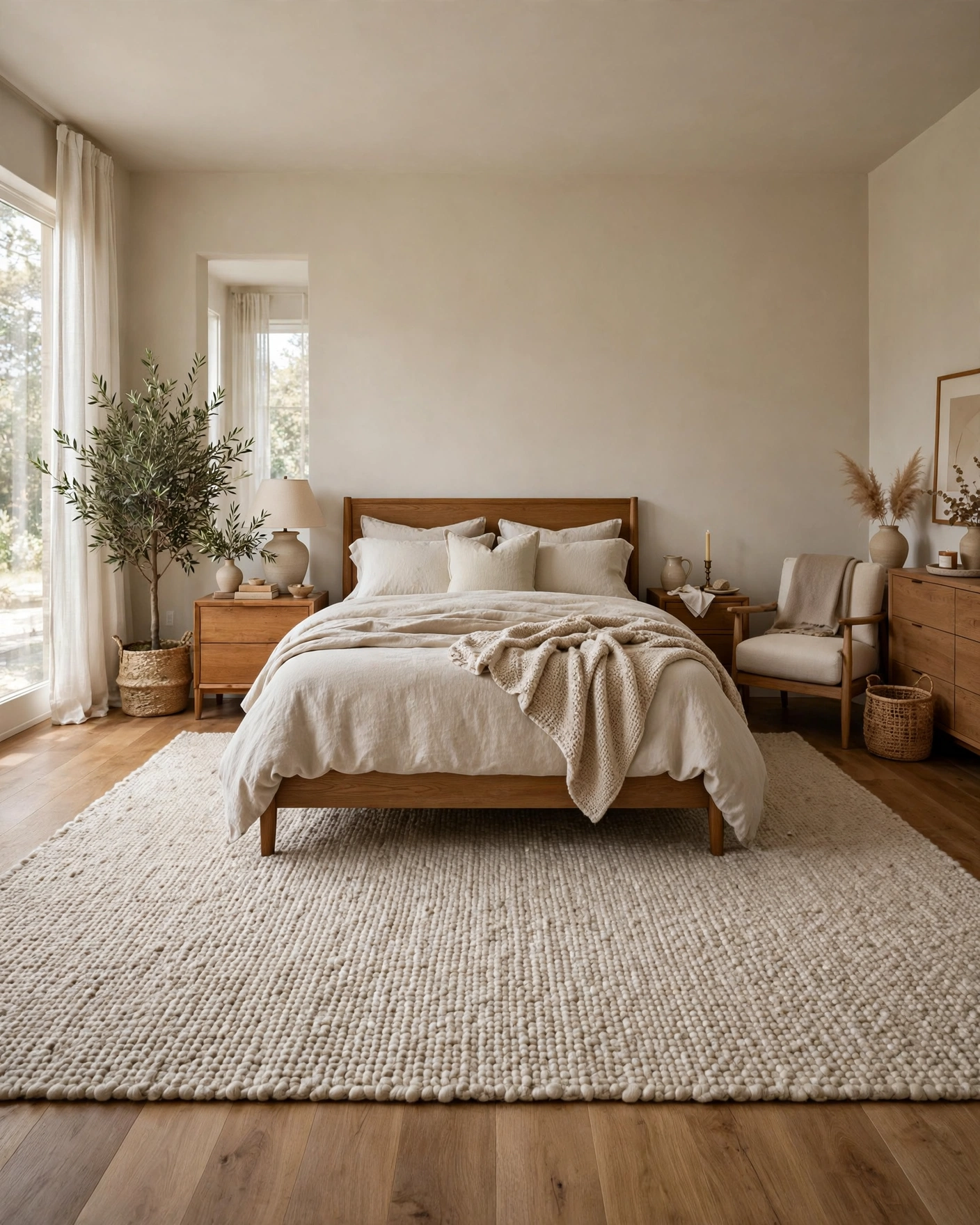
A rug can make a bedroom feel more grounded, especially when the floor is hard or the room contains several pieces of furniture.
Choose a rug large enough to extend beyond the sides and foot of the bed. This creates a more connected arrangement and gives your feet a softer landing in the morning. A low-pile wool rug, a textured cotton rug, or a quality washable option can all work, depending on your budget and lifestyle.
A rug that is too small can look like an isolated accent rather than part of the room’s design.
Try this: Measure the bed and available floor area first. Check the rug’s recommended placement and leave enough room for doors, drawers, and walkways.
6. Bring in Natural Wood
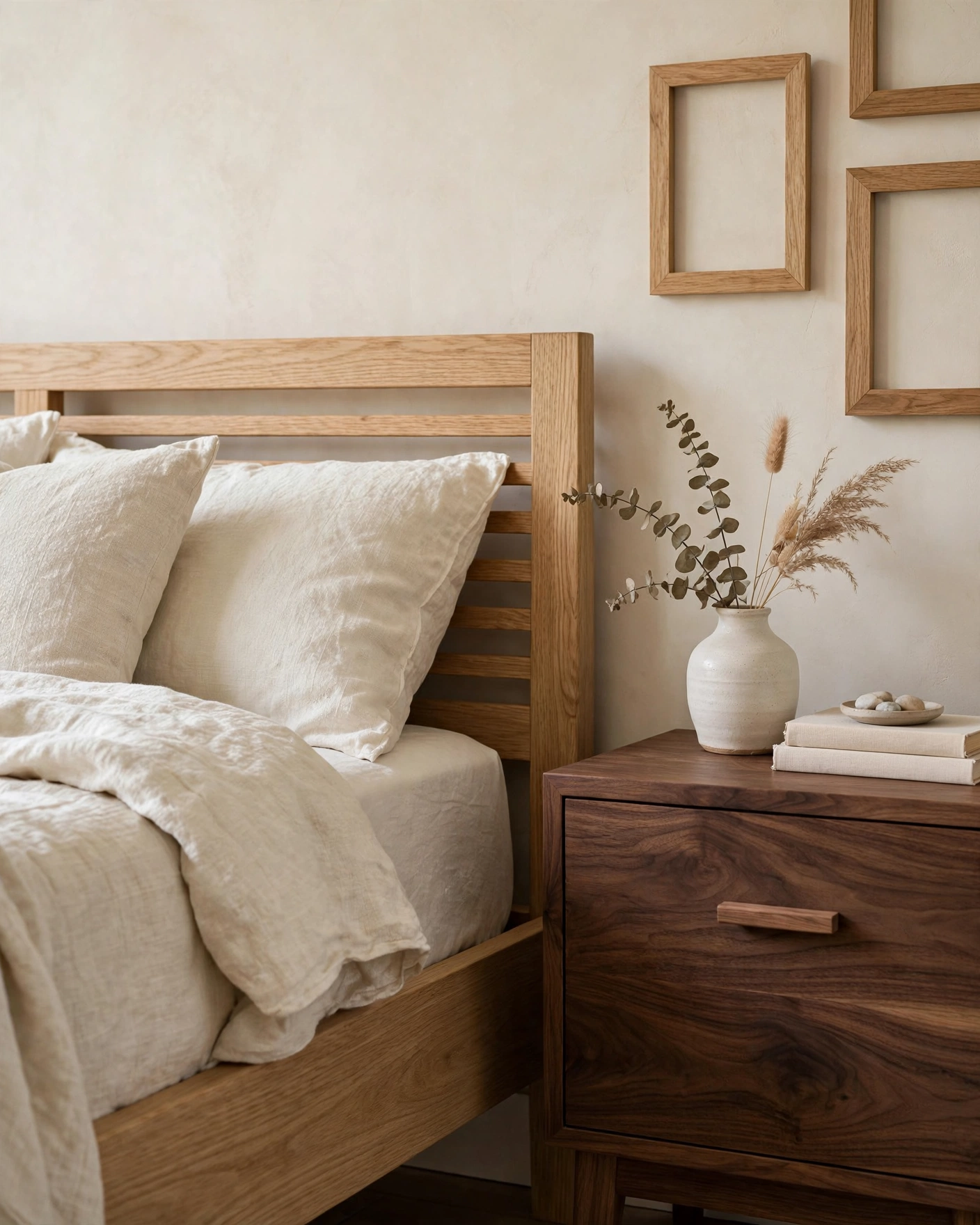
Natural wood introduces warmth that can balance an otherwise neutral bedroom. A walnut nightstand, oak bed frame, wooden bench, or simple picture frame can make the space feel less flat and more welcoming.
You don’t need every wooden piece to match perfectly. Different wood tones can work together when their undertones and overall finishes feel compatible.
If replacing furniture isn’t practical, add smaller accents such as a wooden tray, a picture frame, or a stool.
Try this: Introduce one or two wood tones and repeat them around the room so they feel connected rather than random.
7. Make the Headboard a Focal Point
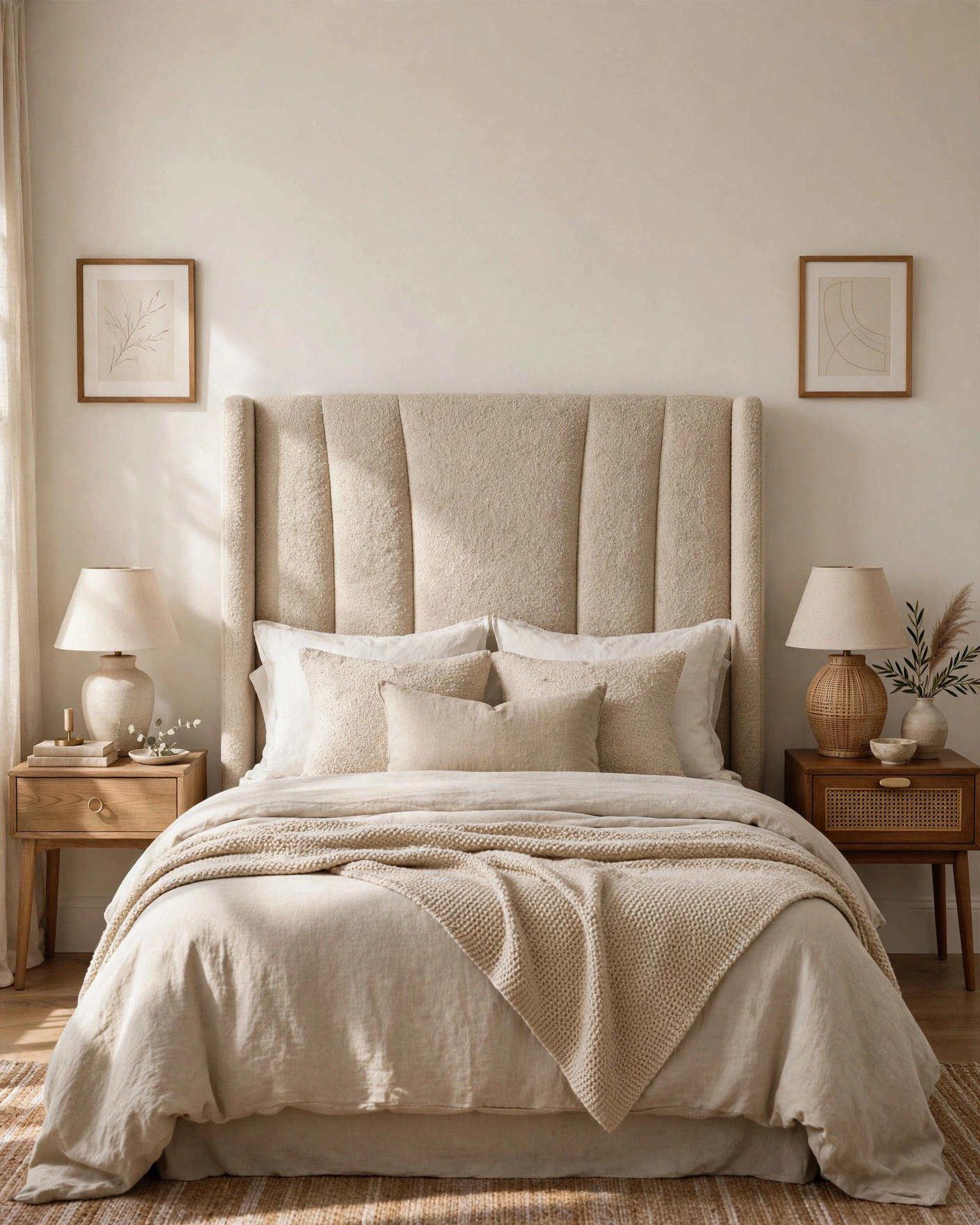
The bed is usually the visual center of a bedroom, so the wall behind it deserves attention. An upholstered headboard adds softness, while a wood headboard introduces natural texture and structure.
For a more dramatic look, consider a taller headboard or a simple wall treatment behind the bed. If you rent, a freestanding headboard or carefully positioned artwork can achieve a similar effect without permanent changes.
Choose a style that fits the room. An oversized headboard can overwhelm a small bedroom, while a very low one may disappear against a large wall.
Try this: Match the headboard’s scale to the bed and wall, then keep the surrounding decor relatively restrained.
8. Style Your Nightstands With Intention
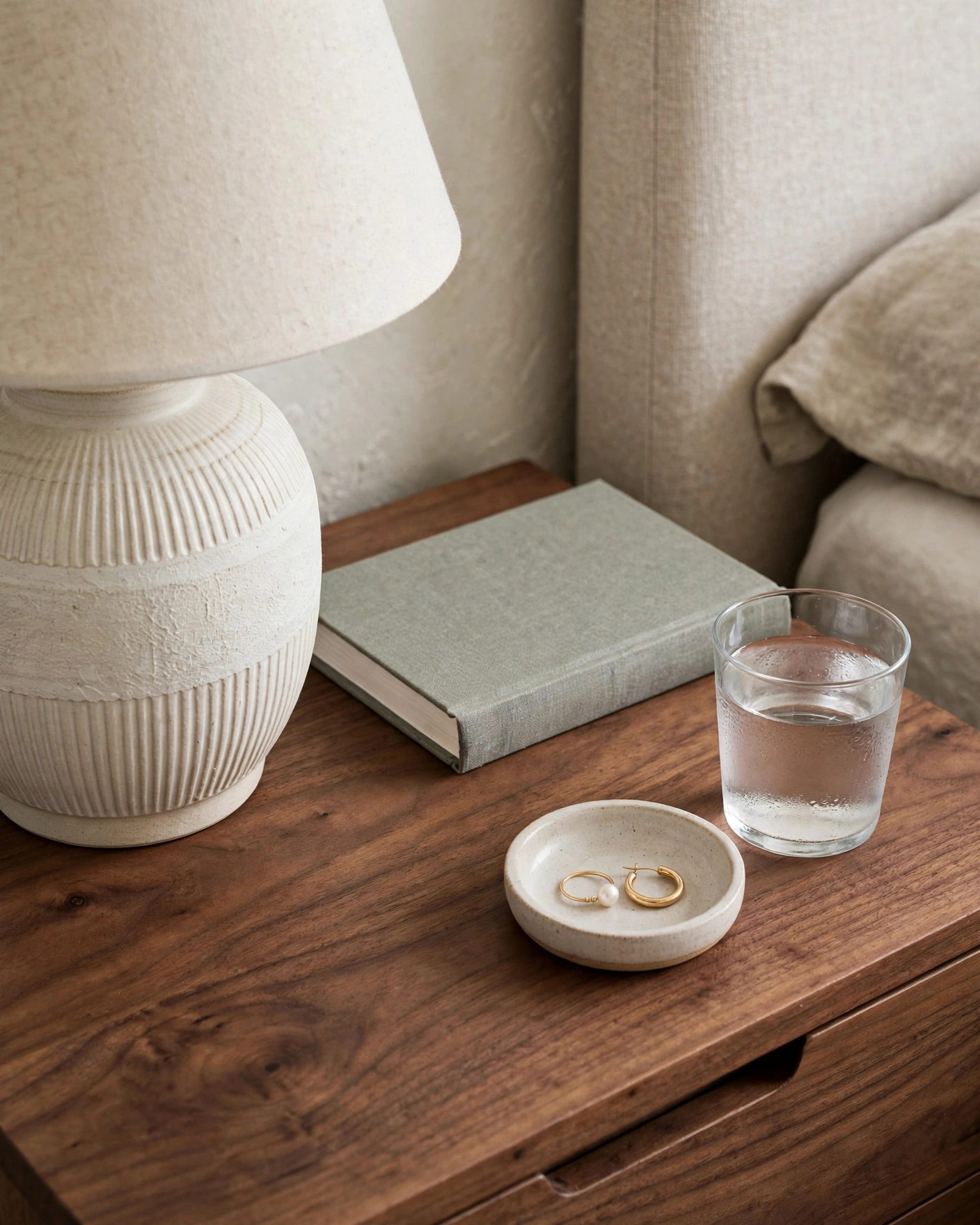
A nightstand can be functional without becoming a collection point for chargers, receipts, cosmetics, and half-finished books.
Start by clearing the surface. Keep a few useful items, such as a lamp, a book, a small dish for jewelry, or a glass of water. A single decorative object can add personality without making the table feel crowded.
Use a drawer or a small organizer for items you need nearby but don’t want on display.
Try this: Group objects in odd-numbered arrangements if they suit the space, but prioritize everyday function over decorating rules.
9. Use Oversized Artwork Above the Bed
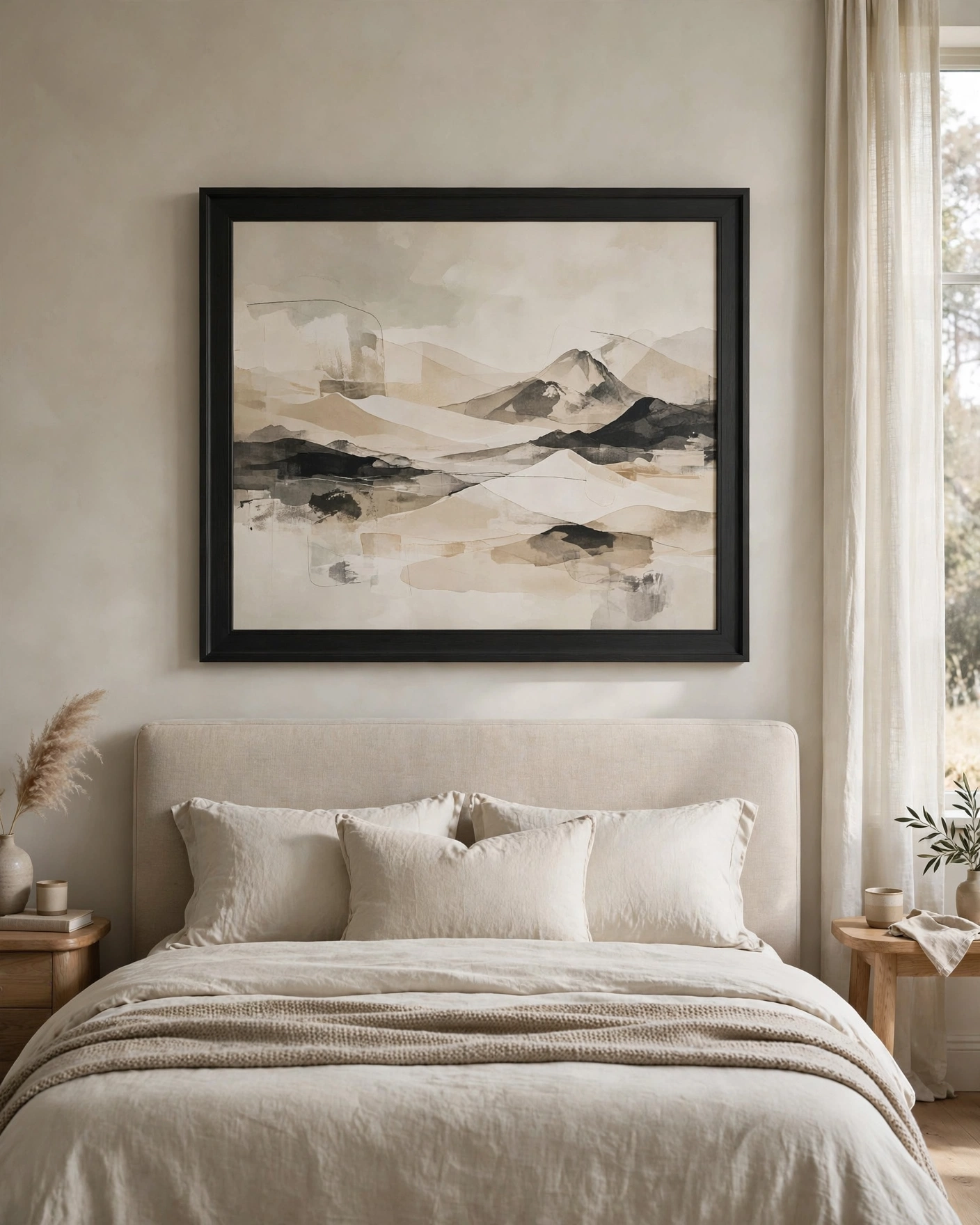
Artwork can give a bedroom a finished look without requiring a major investment. One larger piece above the bed often feels calmer than a collection of tiny prints scattered across the wall.
Abstract art, soft landscapes, botanical illustrations, and muted photography can all complement a cozy bedroom. Choose colors that connect with the bedding, curtains, or rug rather than introducing an entirely unrelated palette.
Hang artwork securely and at a height that feels visually connected to the headboard. Avoid placing heavy objects where they could fall onto the bed.
Try this: If a large original work is outside your budget, look for affordable prints and a simple frame with proportions suited to the wall.
10. Add a Throw Blanket at the Foot of the Bed

A throw blanket introduces another layer of texture and makes the bed look inviting without requiring a full bedding change.
A chunky knit creates a relaxed winter feel, while a lightweight woven throw works well throughout the year. Fold it neatly across the foot of the bed or drape it loosely over one corner for a more casual appearance.
Choose a shade that contrasts gently with your duvet. For example, a caramel throw can warm up ivory bedding, while a muted olive throw can add depth to a cream-and-wood palette.
Try this: Use the throw as the finishing touch rather than adding several blankets that compete for attention.
11. Bring in Plants or Natural Branches
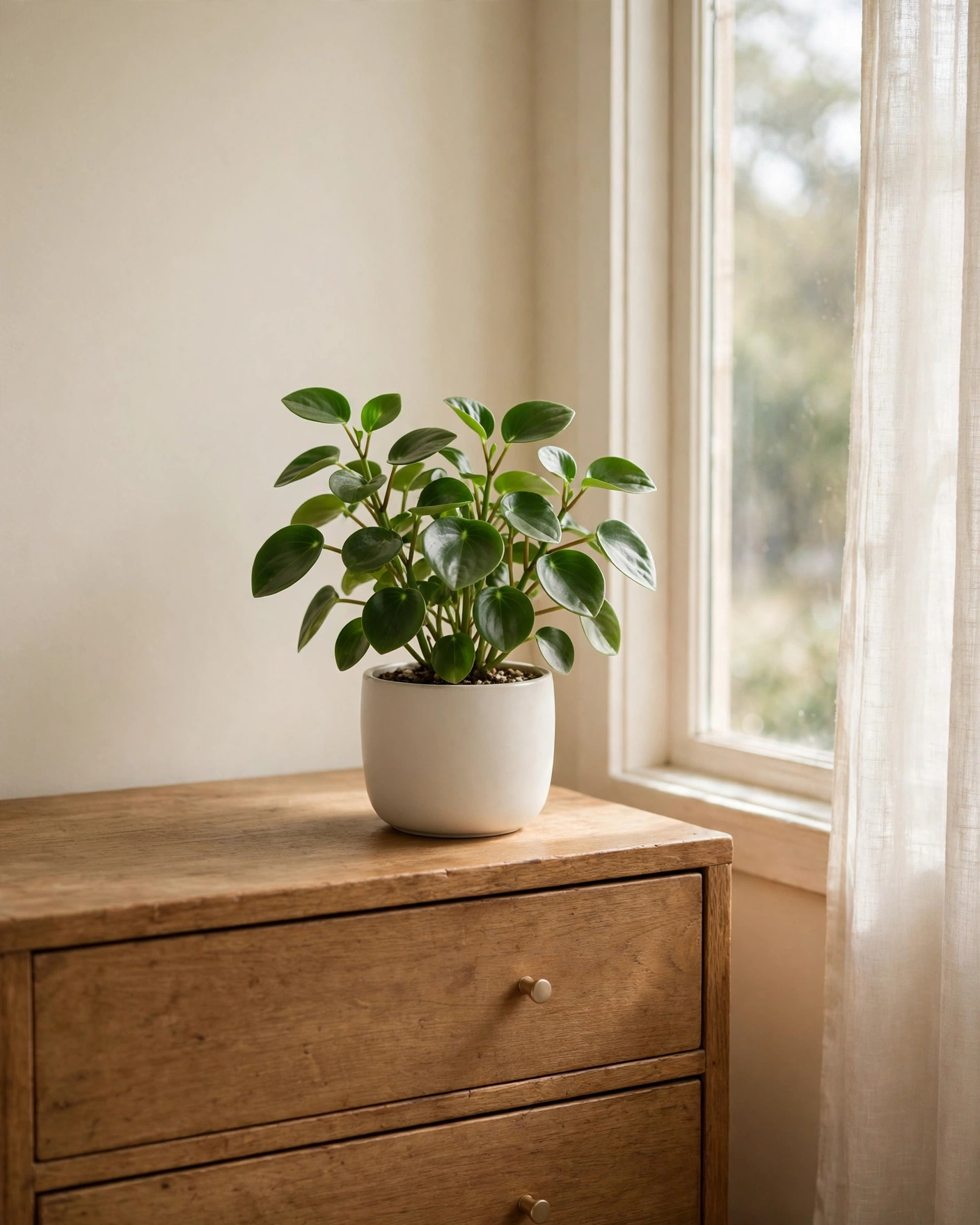
A little greenery can make a bedroom feel more alive. Depending on the light and your maintenance preferences, try a low-maintenance houseplant, a small arrangement of foliage, or a vase with natural branches.
Choose plants based on the room’s actual light conditions rather than appearance alone. If the bedroom gets very little daylight, a suitable artificial plant may be a more practical decorative choice.
Keep plant stands and pots away from narrow walkways, and avoid overloading the nightstand with items that need frequent watering.
Try this: Start with one plant in a simple ceramic pot or one vase on a dresser. A small, intentional arrangement is often enough.
12. Create a Cozy Reading Corner
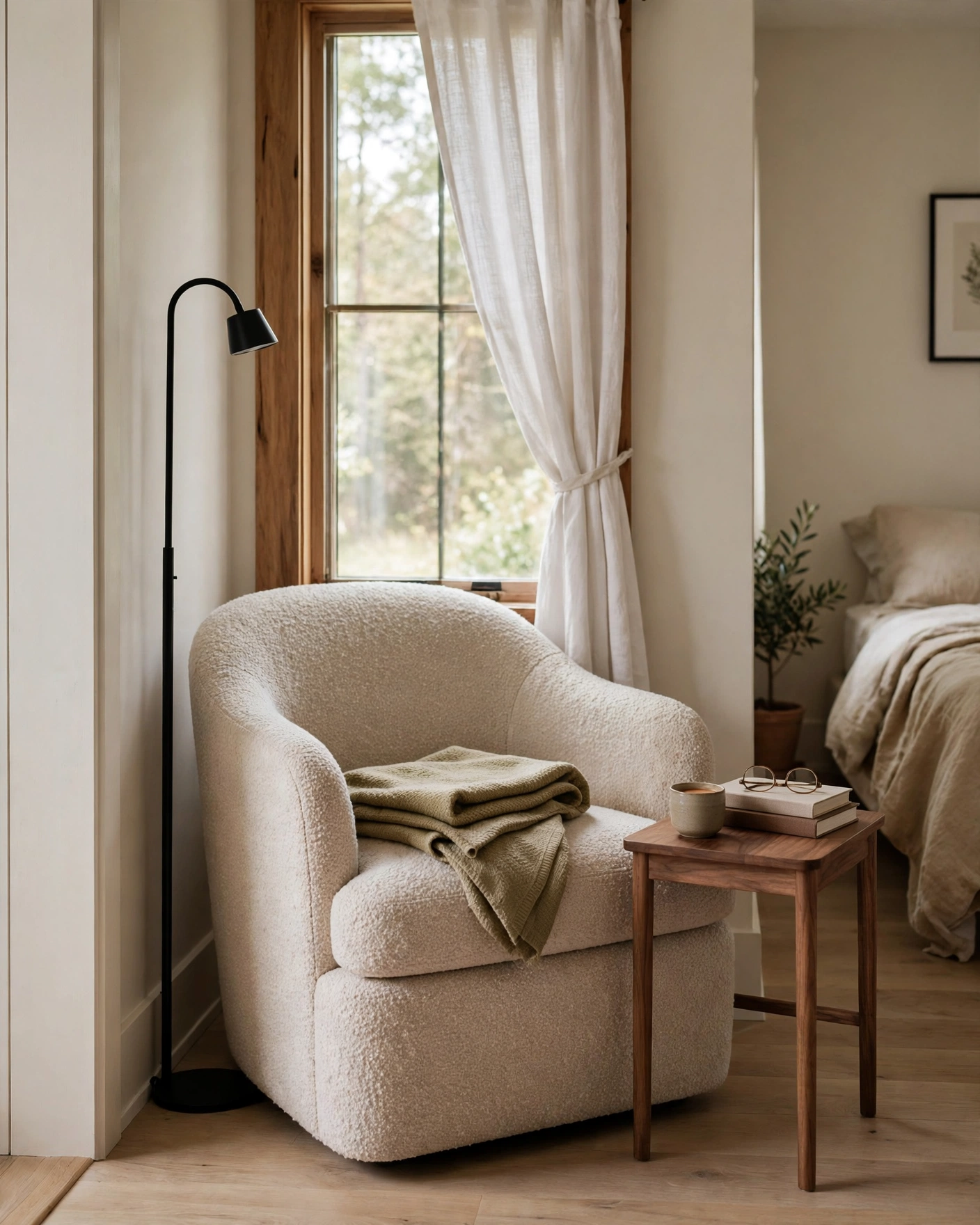
If you have an unused corner, turn it into a small place to read, journal, or enjoy a quiet morning.
A compact accent chair, a floor lamp, and a small side table can be all you need. In a smaller room, a cushioned chair or a bench near a window may be more practical than a large armchair.
Choose lighting that makes reading comfortable and leave enough space to move around the furniture easily.
Try this: Before buying anything, measure the corner and mark the proposed furniture footprint with painter’s tape to check the available space.
13. Use Matching or Coordinated Pillow Covers
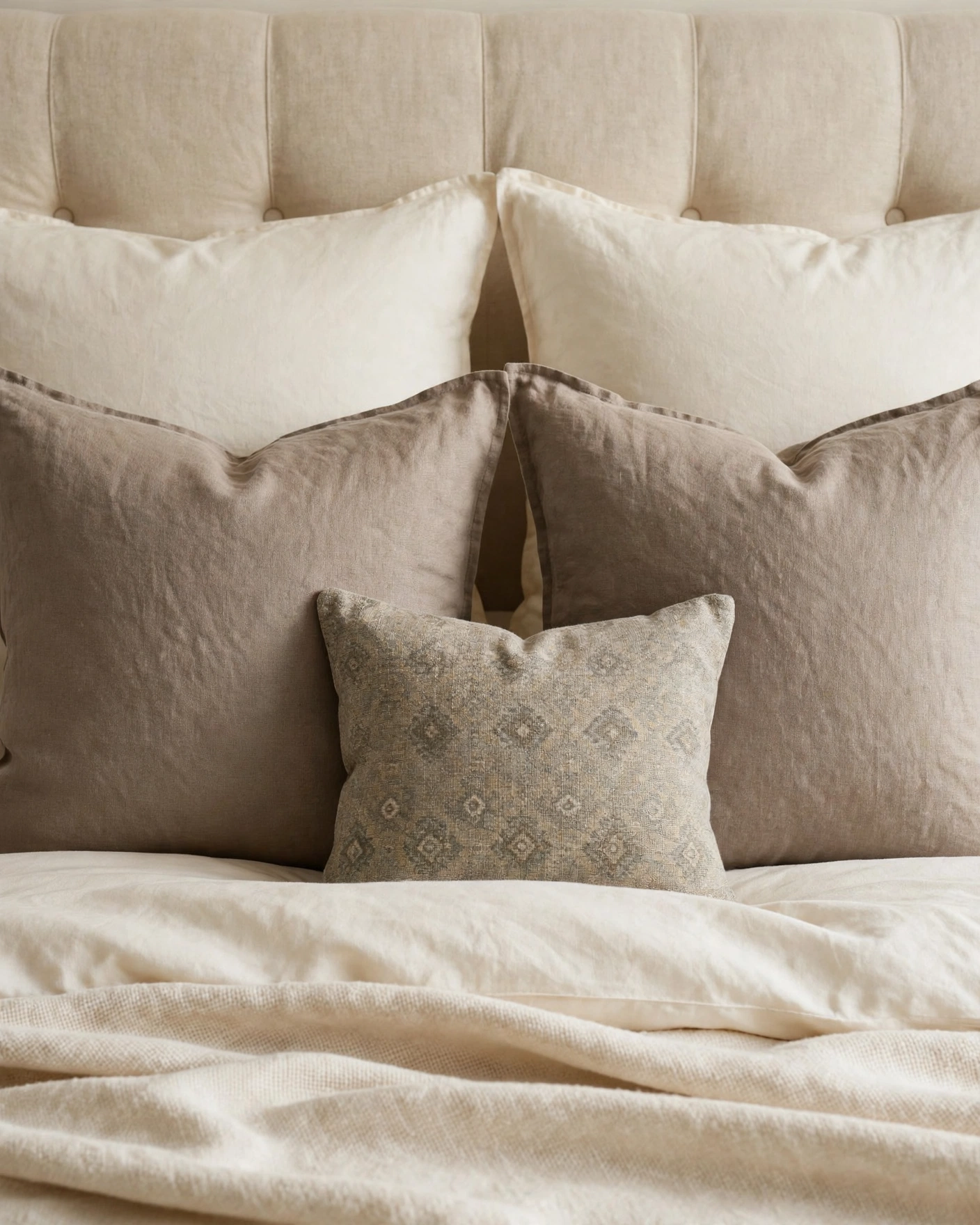
Pillows can help connect the different colors and textures in your bedroom. They don’t all need to match, but they should look as though they belong in the same palette.
For example, combine cream pillowcases with a pair of taupe accent pillows and one smaller cushion in a subtle pattern. If your bedding is already patterned, keep the decorative pillows simpler.
Pillow covers are also a budget-friendly way to refresh a room seasonally without buying entirely new cushions.
Try this: Repeat one color from your curtains, rug, or artwork in the decorative pillows to make the room feel more cohesive.
14. Add Subtle Wall Texture
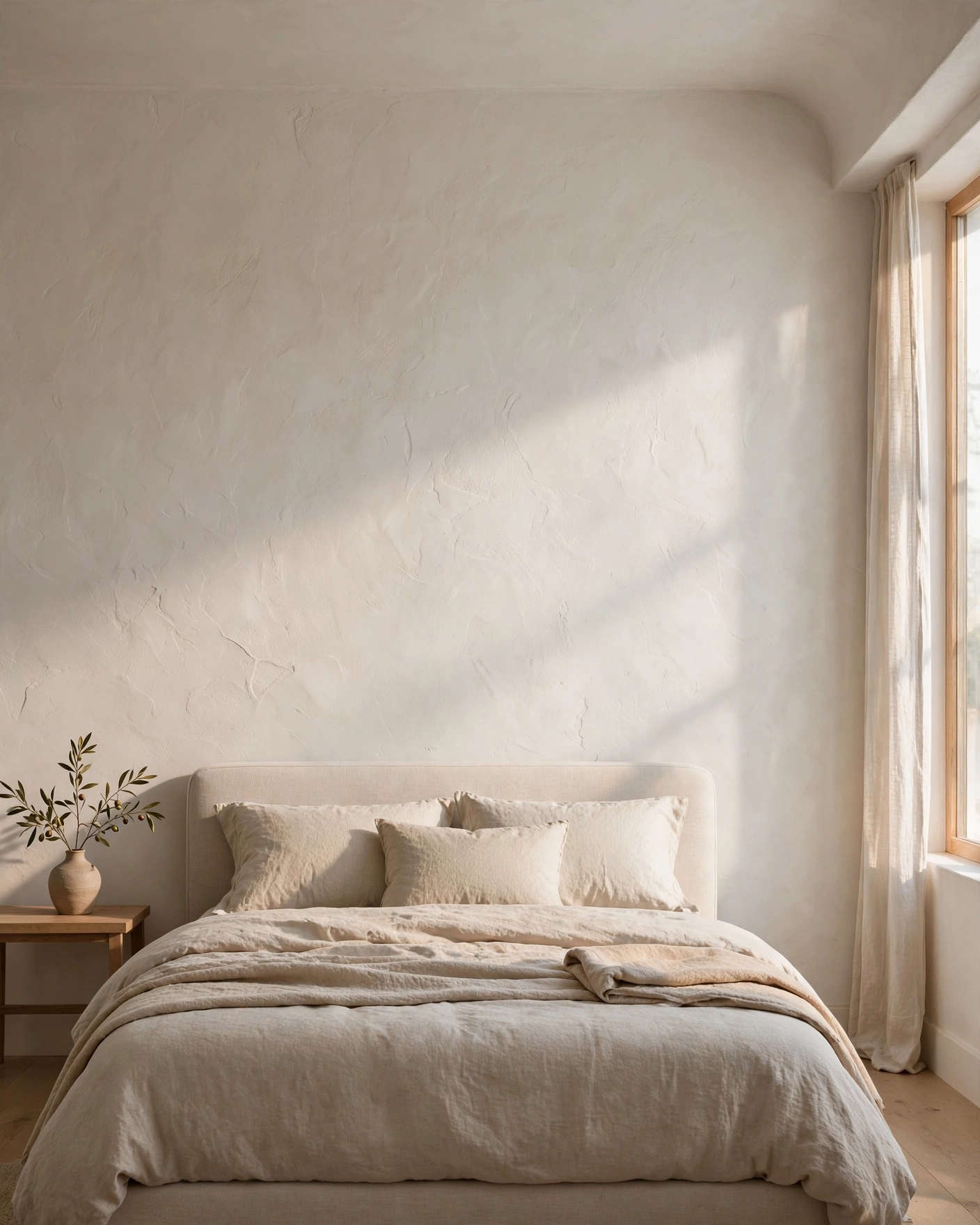
A bedroom doesn’t need elaborate paneling or expensive wallpaper to have character. Texture can come from a woven wall hanging, a framed textile, a textured paint finish, or a simple removable wallpaper accent.
If you’re considering a feature wall, the area behind the bed is often a natural place to begin. Keep the pattern and contrast appropriate to the room’s size and existing furniture.
For renters, check removal instructions and test products in an inconspicuous spot before applying them to painted walls.
Try this: Introduce texture in one main area first. If the room already contains patterned bedding or a bold rug, choose a quieter wall treatment.
15. Keep the Floor and Walkways Clear
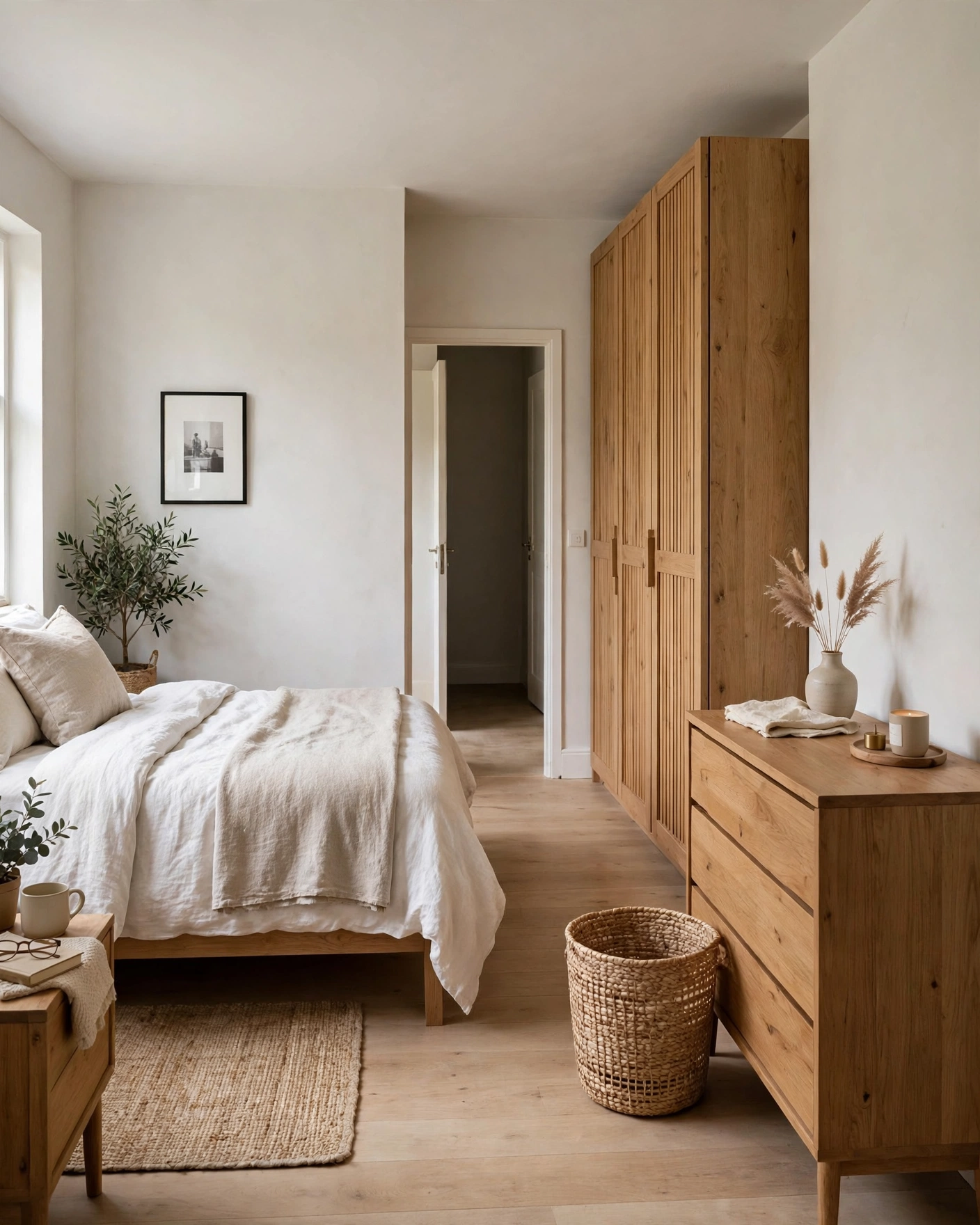
A cozy bedroom should feel comfortable to move through. Even beautiful decor can look messy when clothes, bags, and miscellaneous items accumulate on the floor.
Give frequently used items a designated place. A laundry hamper, hooks behind the door, under-bed storage, or a small basket can make everyday tidying easier.
Pay attention to the route between the bed, closet, and door. A clear walkway makes the room feel more open and functional, especially in a small apartment.
Try this: Spend ten minutes removing items that don’t belong in the bedroom and identify one storage solution for the clutter that returns most often.
16. Choose Furniture With Slim, Balanced Proportions
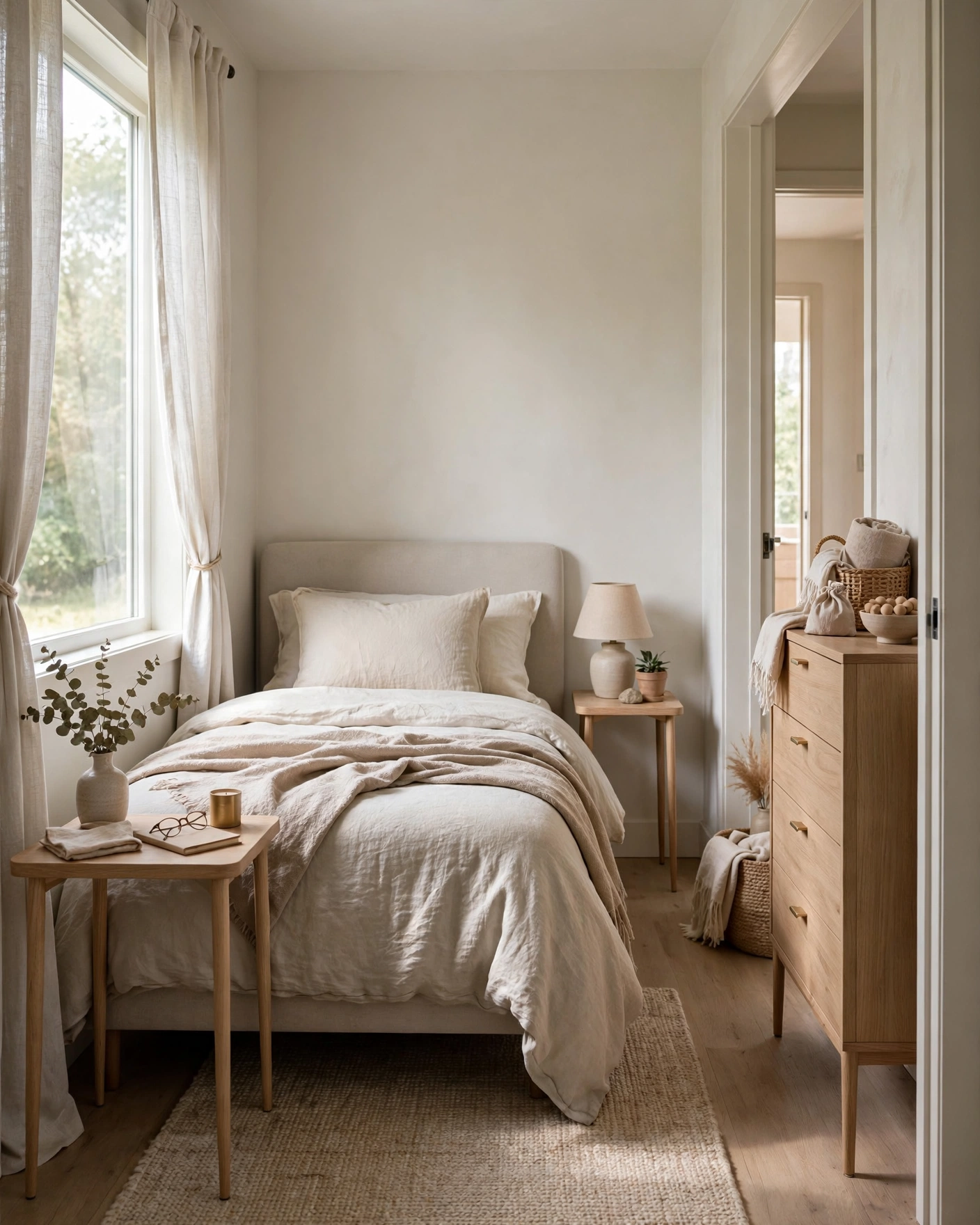
Furniture that suits the scale of the room can make a bigger difference than expensive finishes. In a compact bedroom, oversized nightstands, deep dressers, and bulky chairs can make movement difficult.
Consider narrower bedside tables, a bed frame with visible legs, or a dresser that offers storage without dominating the wall. If storage is limited, choose pieces that serve more than one purpose.
Don’t sacrifice stability or comfort simply to achieve a minimal look.
Try this: Measure the room and the furniture before shopping. Include drawer-opening space and the clearance needed to walk around the bed.
17. Use Mirrors to Reflect Light
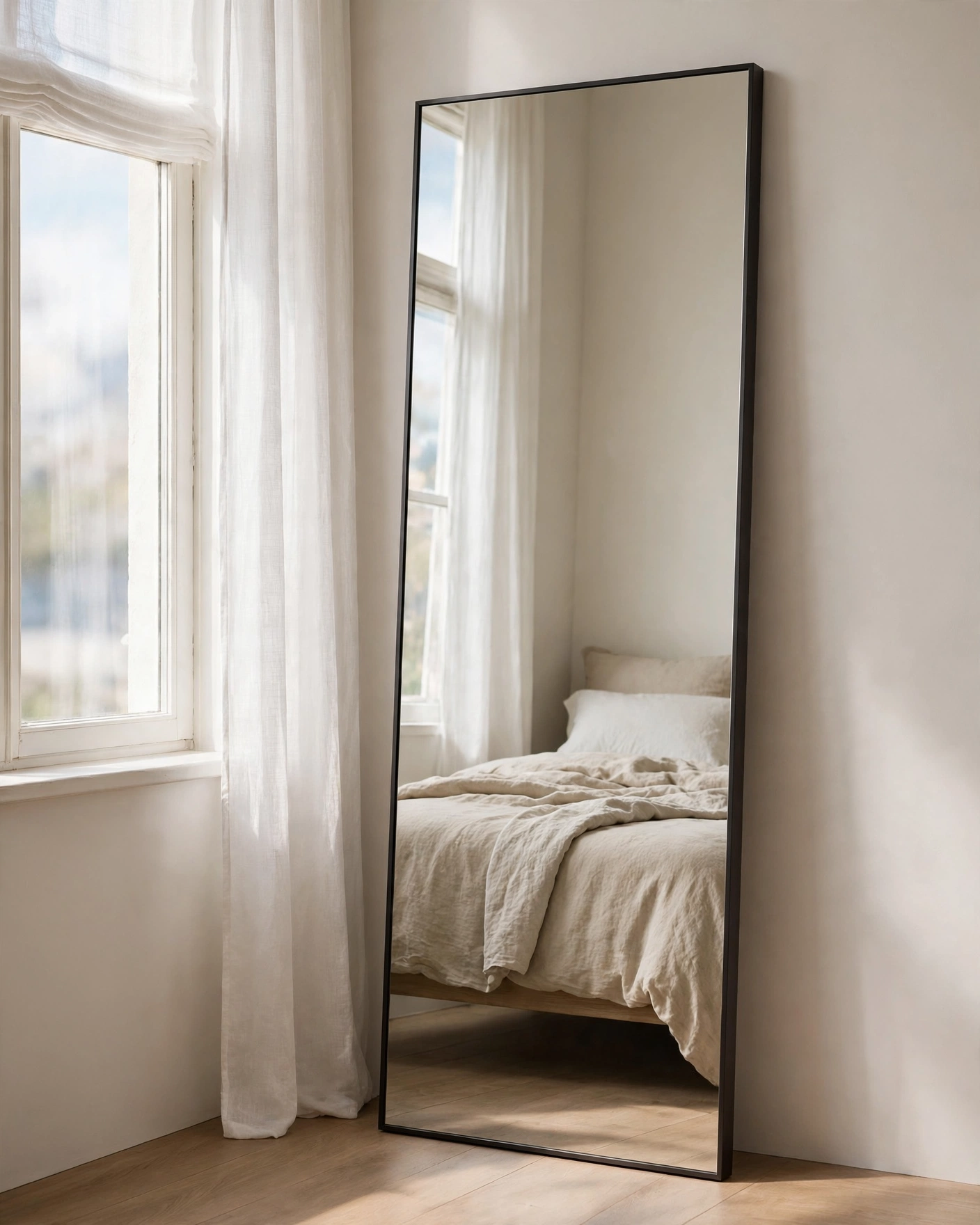
A well-placed mirror can help a bedroom feel brighter and create a greater sense of depth. A full-length mirror beside a closet or a medium-sized mirror above a dresser can be both practical and decorative.
Position it to reflect a window or another pleasant part of the room rather than clutter. Choose a frame that fits the rest of the decor, whether that’s warm wood, matte black, brass, or a simple frameless design.
Secure large mirrors appropriately, especially in homes with children or pets.
Try this: Test the mirror’s position before mounting it. A small change in angle can alter what it reflects and how much light it catches.
18. Introduce a Touch of Black or Dark Contrast
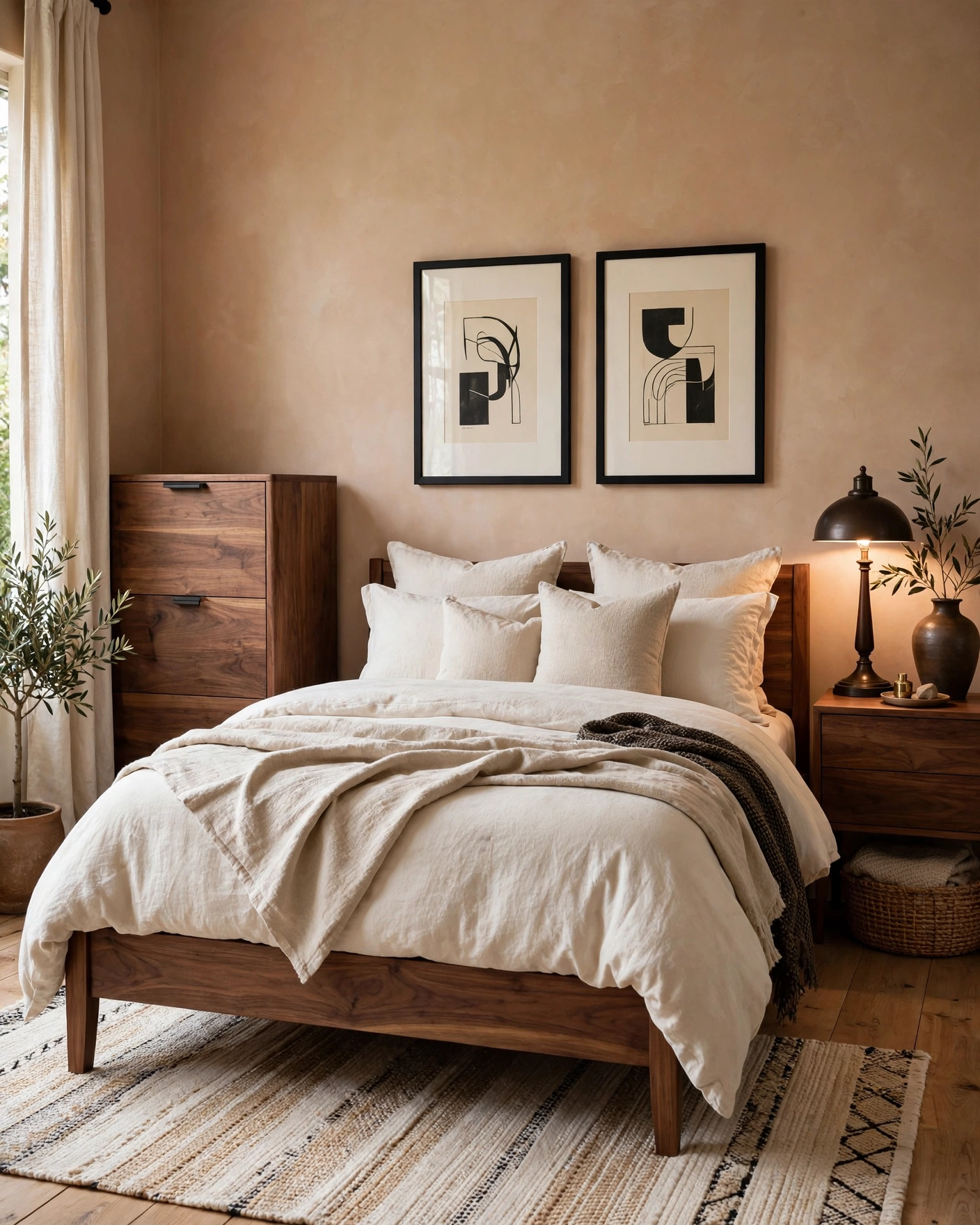
A room made entirely of pale colors can sometimes lack definition. A few darker accents can give the design structure without making it feel less cozy.
Try a black picture frame, dark bronze lamp, walnut furniture, or a small charcoal cushion. These details create contrast against cream walls and light bedding.
The key is restraint. Too many unrelated dark accents can make a soft, airy bedroom feel visually busy.
Try this: Repeat the darker tone in two or three places, such as the lamp, artwork frame, and furniture hardware.
19. Add Soft Lighting at More Than One Level
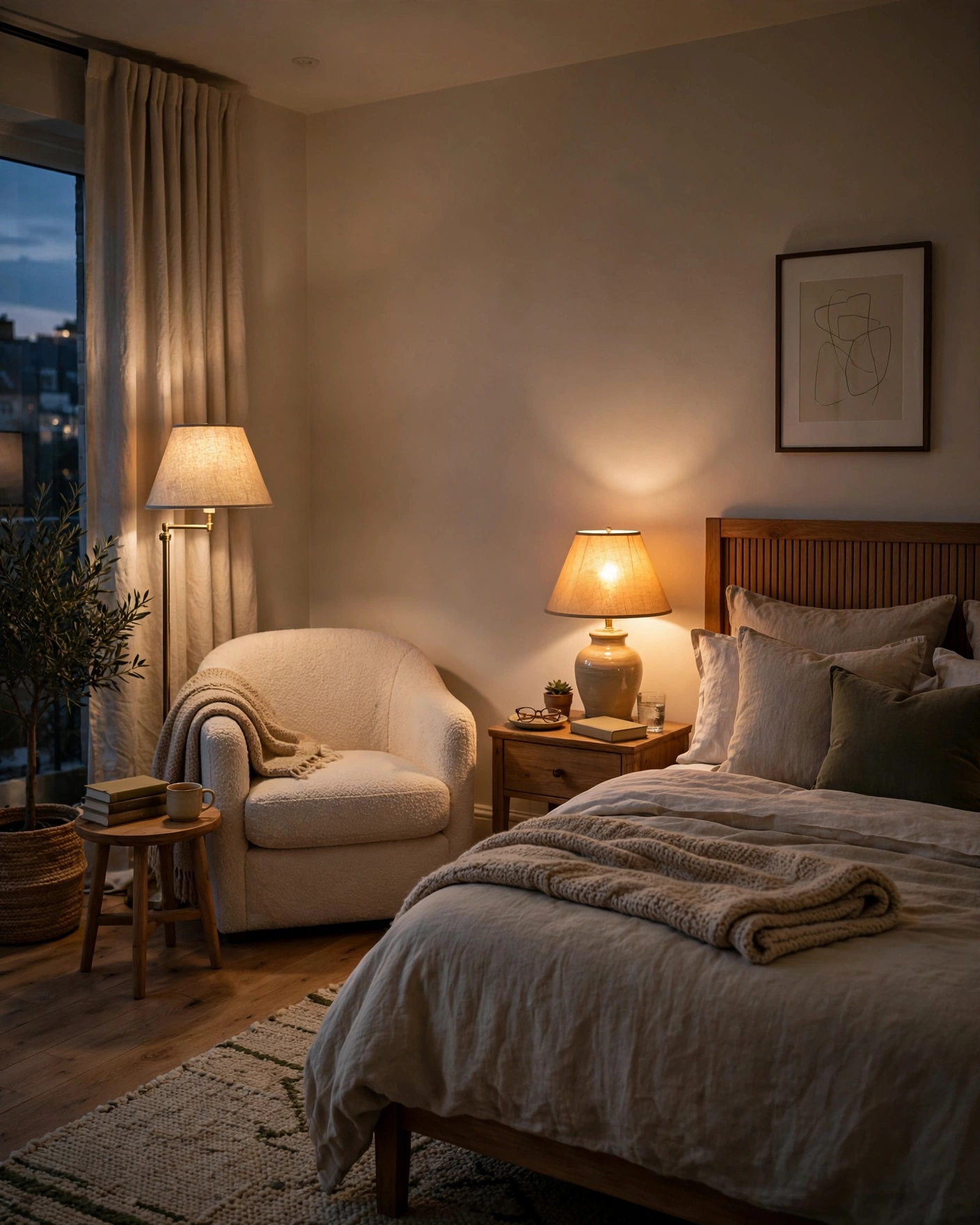
Instead of relying on one ceiling light, combine different sources of illumination. Bedside lamps provide evening light, a floor lamp can brighten a reading corner, and indirect lighting can add a gentle glow where appropriate.
Dimmable fixtures are especially useful because they let you adjust the brightness for different activities. Choose products designed for their intended use and follow the manufacturer’s safety instructions.
Avoid exposed, overly bright bulbs in your direct line of sight when you’re relaxing in bed.
Try this: Turn off the overhead light one evening and assess where you need more light for reading, dressing, or moving safely through the room.
20. Make a Small Bedroom Feel More Open
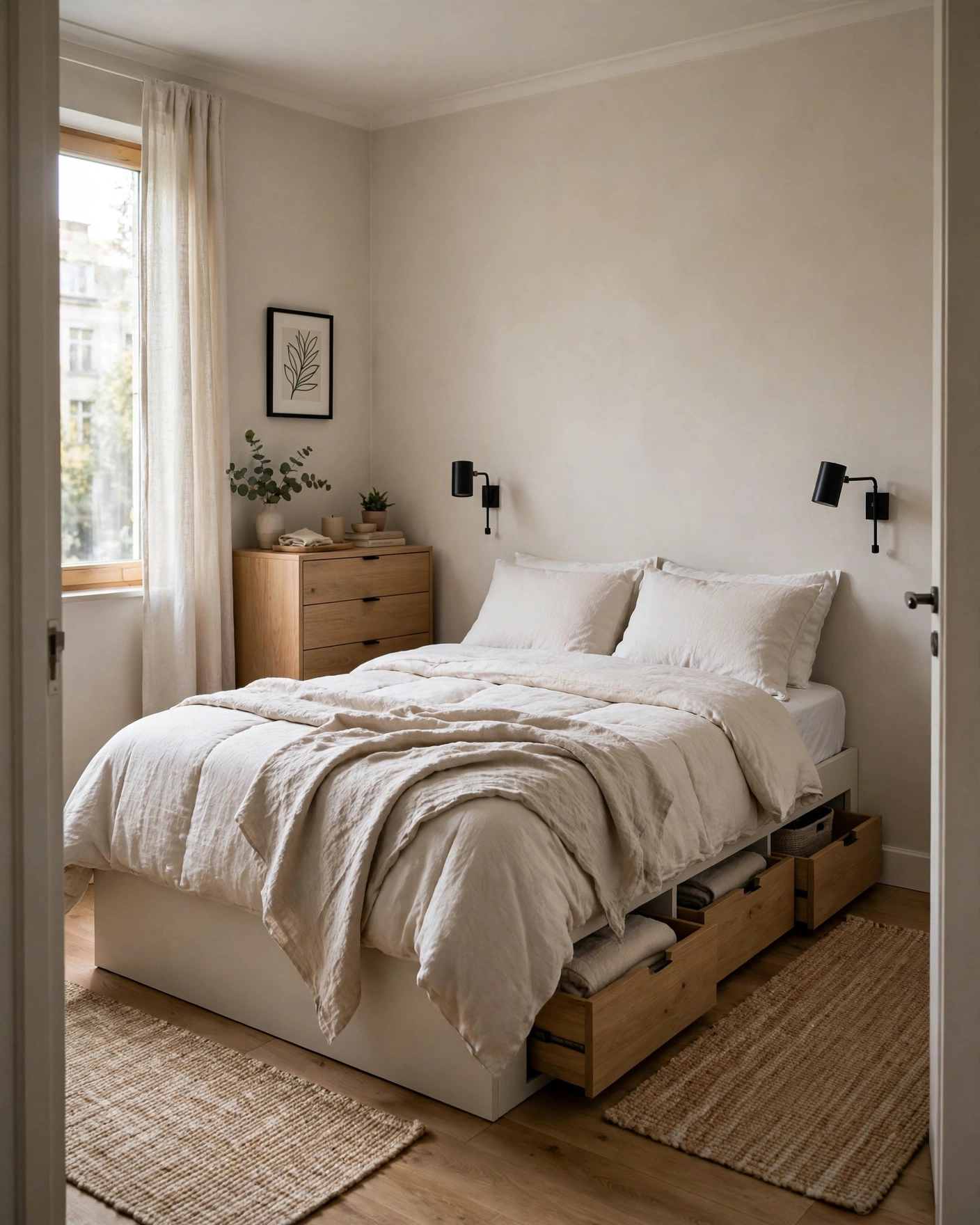
A small bedroom can feel elegant when the layout is simple and the furniture is appropriately scaled.
Use the space under the bed if you need extra storage, choose bedside tables that fit comfortably, and avoid filling every available wall with furniture. Light colors can help the room feel airy, but you can still use deeper shades if you prefer a more intimate atmosphere.
Mirrors, vertical curtains, and well-placed lighting can also influence how the room feels.
Try this: Remove one unnecessary piece of furniture or decorative object and see whether the room becomes easier to navigate.
21. Add a Bench or a Practical End-of-Bed Accent
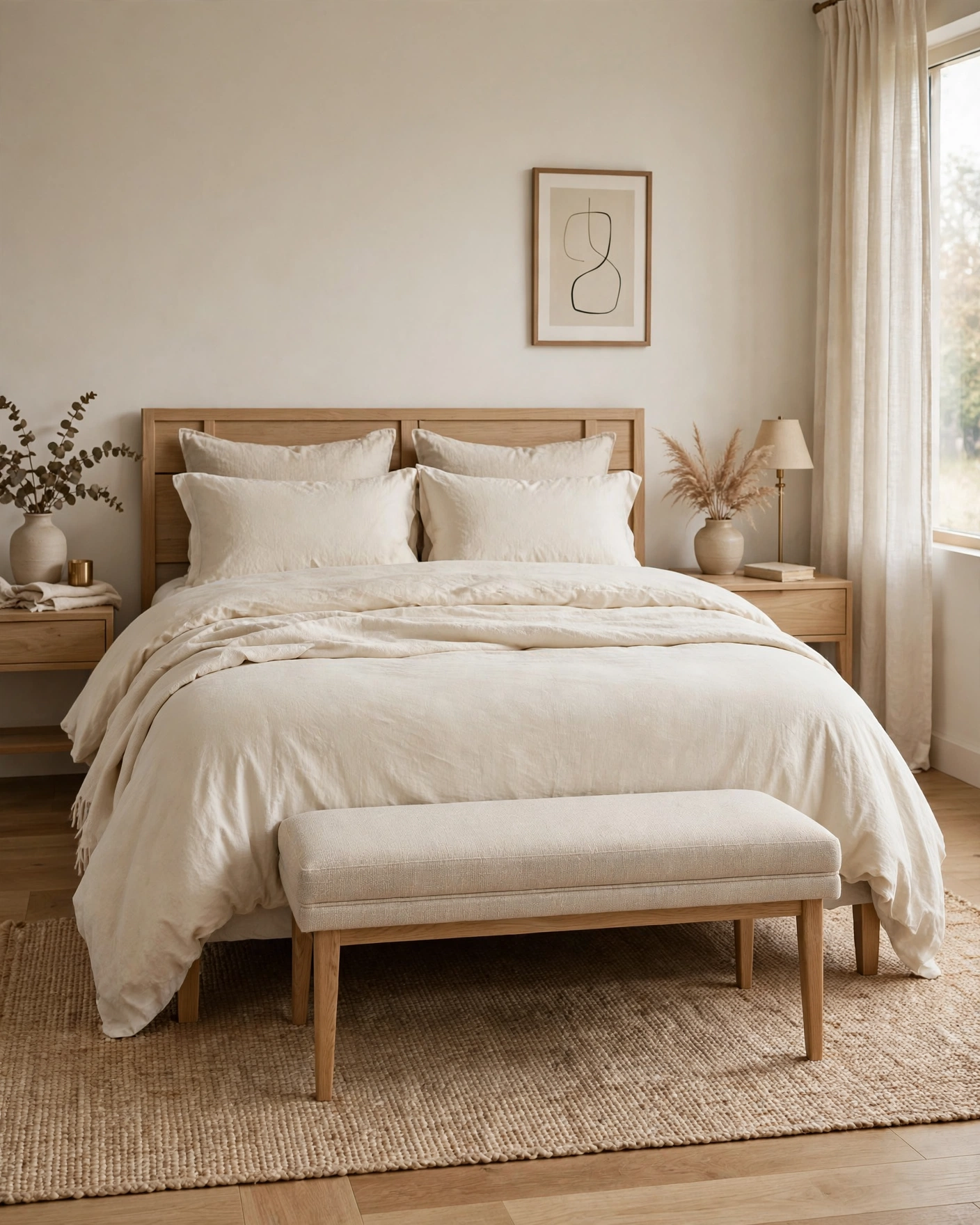
A bench at the foot of the bed can add a finished look while giving you a place to sit or set out clothes. It works best when the room has enough space to preserve a comfortable walkway.
For a compact bedroom, consider a narrow upholstered bench or a storage ottoman. If the foot of the bed is already close to a wall or dresser, skip the bench rather than squeezing it in.
Choose a fabric and finish that complement the bedding without making every item look identical.
Try this: Check the remaining clearance before buying. A beautiful bench isn’t useful if it blocks drawers or makes getting around the bed awkward.
22. Repeat Materials for a More Cohesive Look
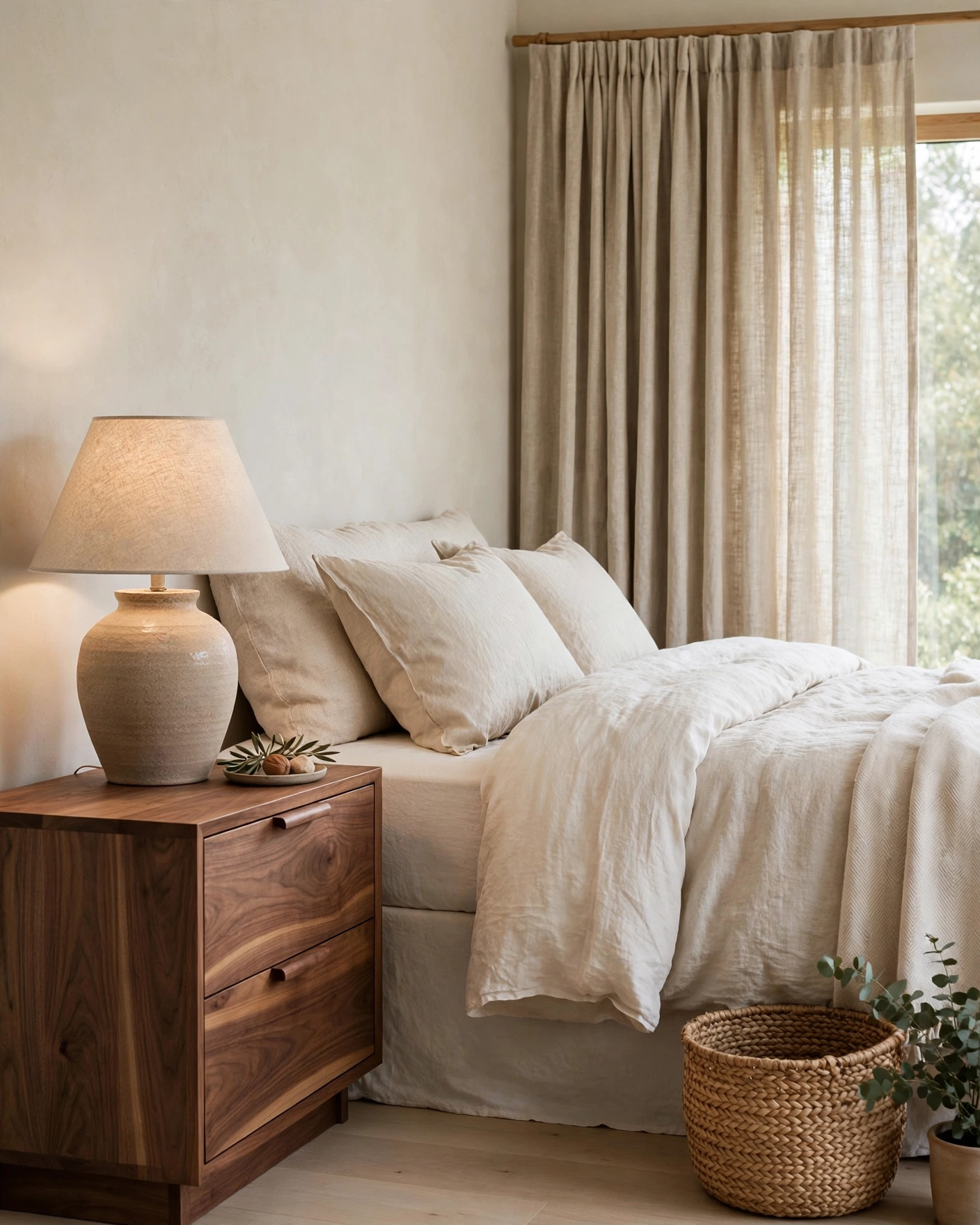
A room often feels more thoughtfully designed when certain materials appear in more than one place. Wood might appear in the nightstands and picture frames, while linen-look fabric appears in the curtains and bedding.
This doesn’t mean everything needs to be a matching set. Repetition simply helps the eye connect separate objects into a coherent design.
Try to avoid introducing too many unrelated finishes at once, especially in a small room.
Try this: Choose two or three materials as the foundation of the room, such as wood, cotton, and ceramic, then use them consistently.
23. Make Space for Personal Details
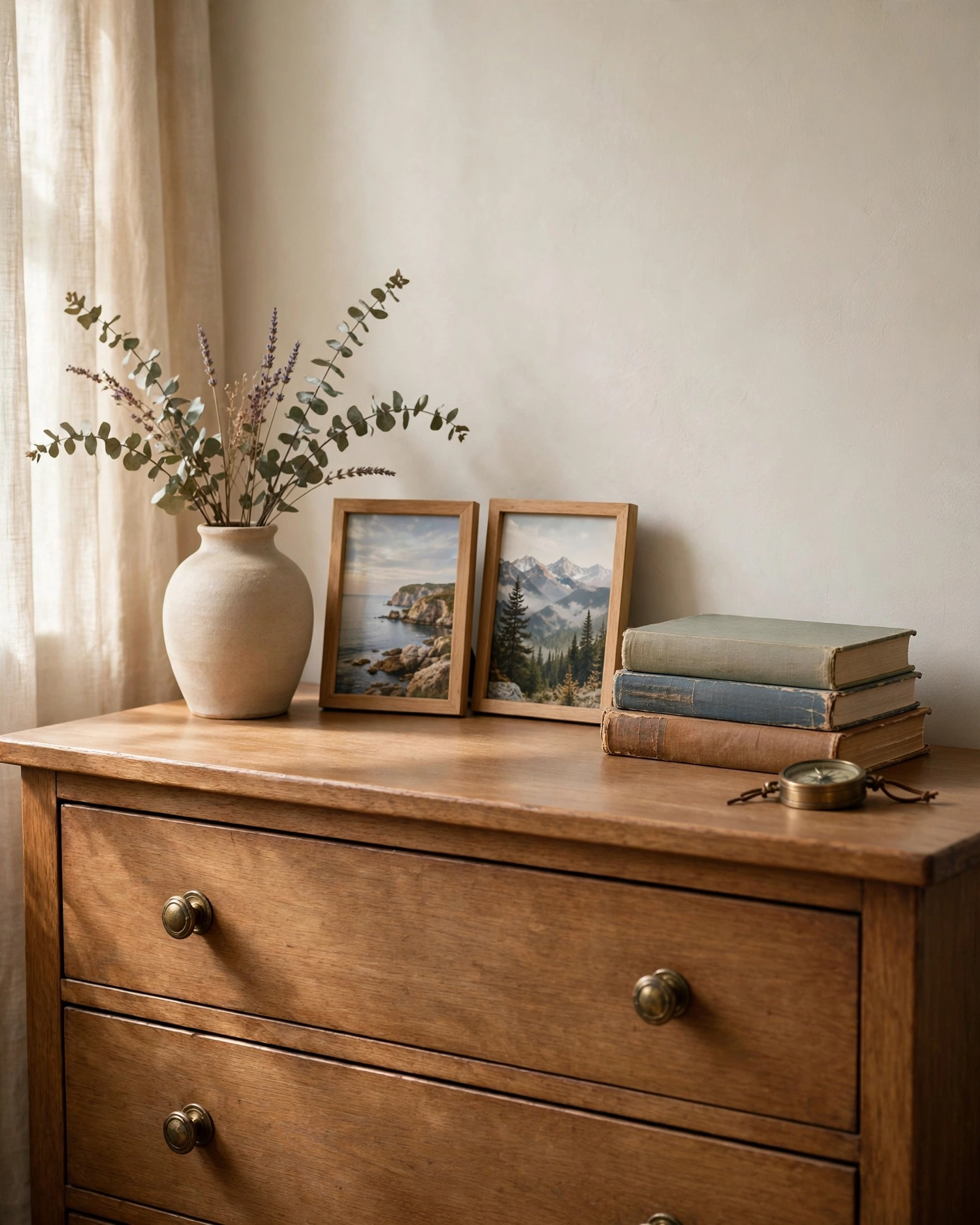
A bedroom should reflect the person who uses it, not just a perfectly styled photograph. Favorite books, meaningful photographs, travel souvenirs, and artwork can make a neutral room feel personal and lived-in.
The goal isn’t to hide every personal object. It’s to display the things that matter in a way that feels deliberate.
A few favorite items on a shelf or dresser can provide more character than a collection of generic decorative accessories.
Try this: Choose three meaningful objects to display and store the rest until you find the right place for them.
24. Refresh the Room With Seasonal Textiles
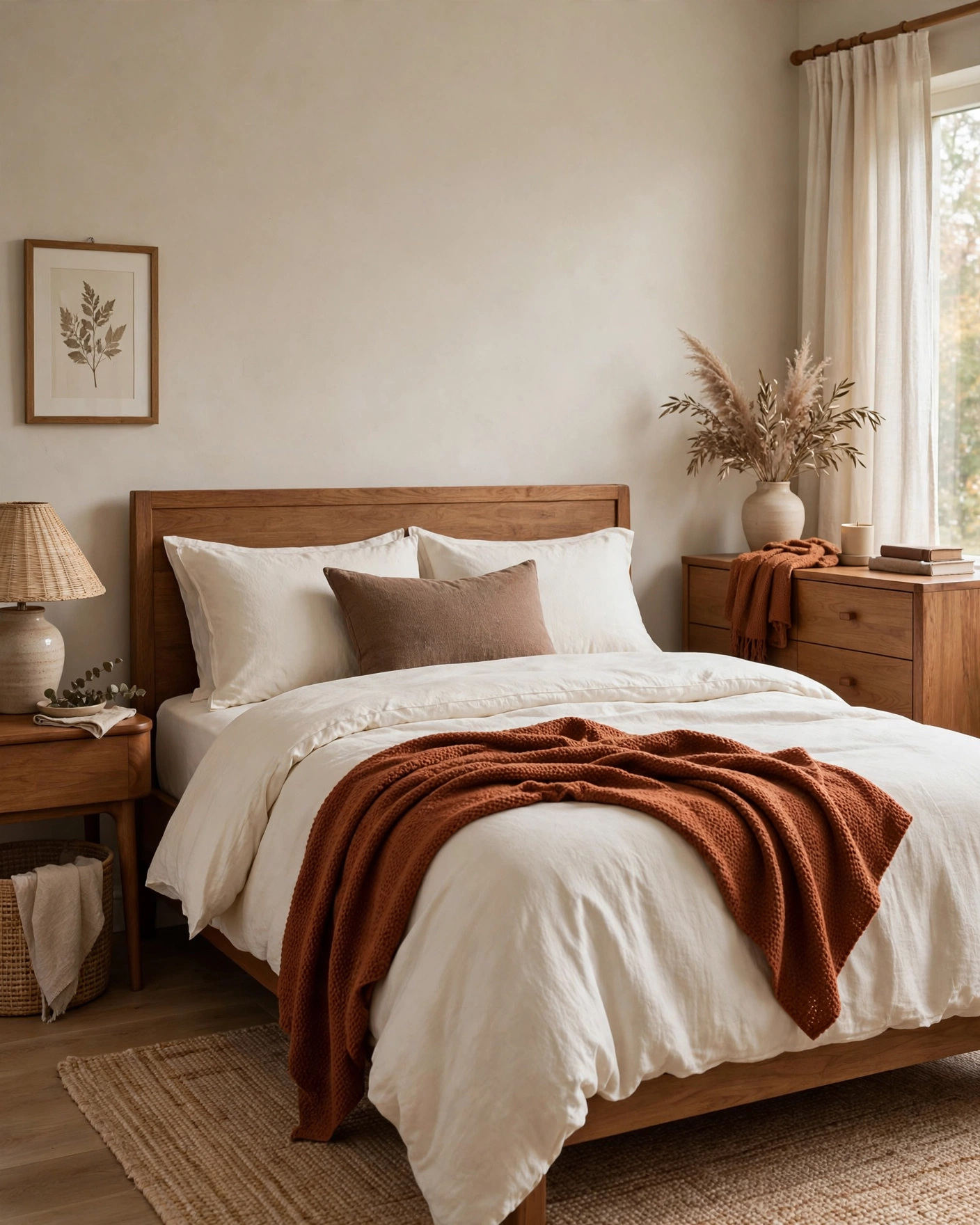
You don’t need a complete bedroom makeover every season. Changing a few textiles can make the space feel fresh without creating unnecessary expense or storage problems.
In fall and winter, try a warmer throw, richer accent colors, or a slightly heavier duvet. In spring and summer, lighter bedding, breathable cotton, and airy curtains may feel more comfortable.
Keep the base pieces versatile so seasonal changes are limited to a few accessories.
Try this: Store off-season throws and pillow covers together in a labeled container so they’re easy to find when the weather changes.
25. Use Wallpaper or Paint to Define the Bed Wall
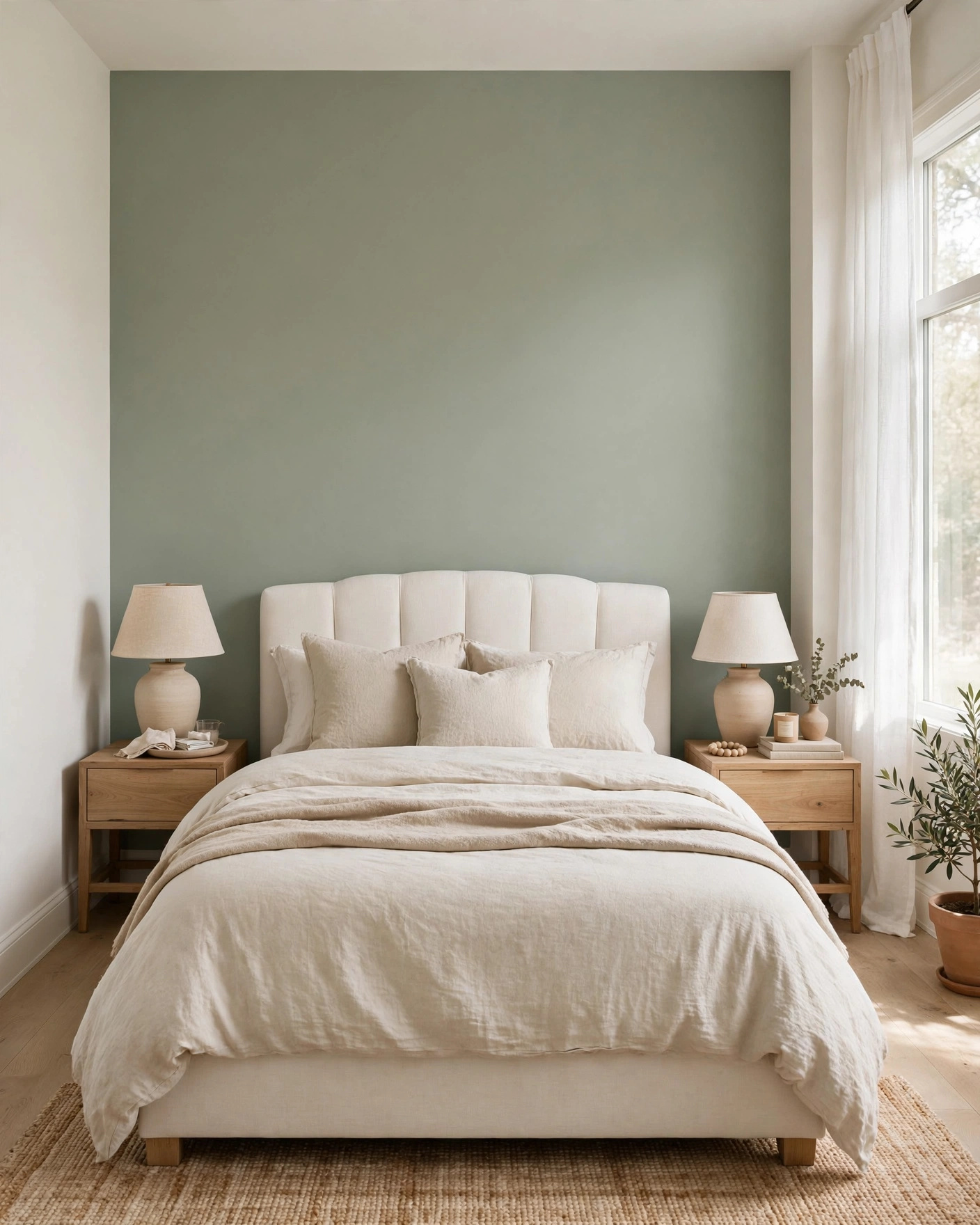
A carefully chosen paint color or wallpaper can make the bed wall feel like a design feature. Muted green, warm taupe, dusty blue, or a subtle textured pattern can add depth without overwhelming the room.
Before committing, test paint samples at different times of day. Natural and artificial light can make the same shade appear quite different.
If you’re renting, removable wallpaper may be an option, but check the manufacturer’s instructions and your lease before applying it.
Try this: Keep the remaining walls and bedding relatively simple if the bed wall has a strong color or pattern.
26. Create a Calm, Clutter-Free Dresser Top
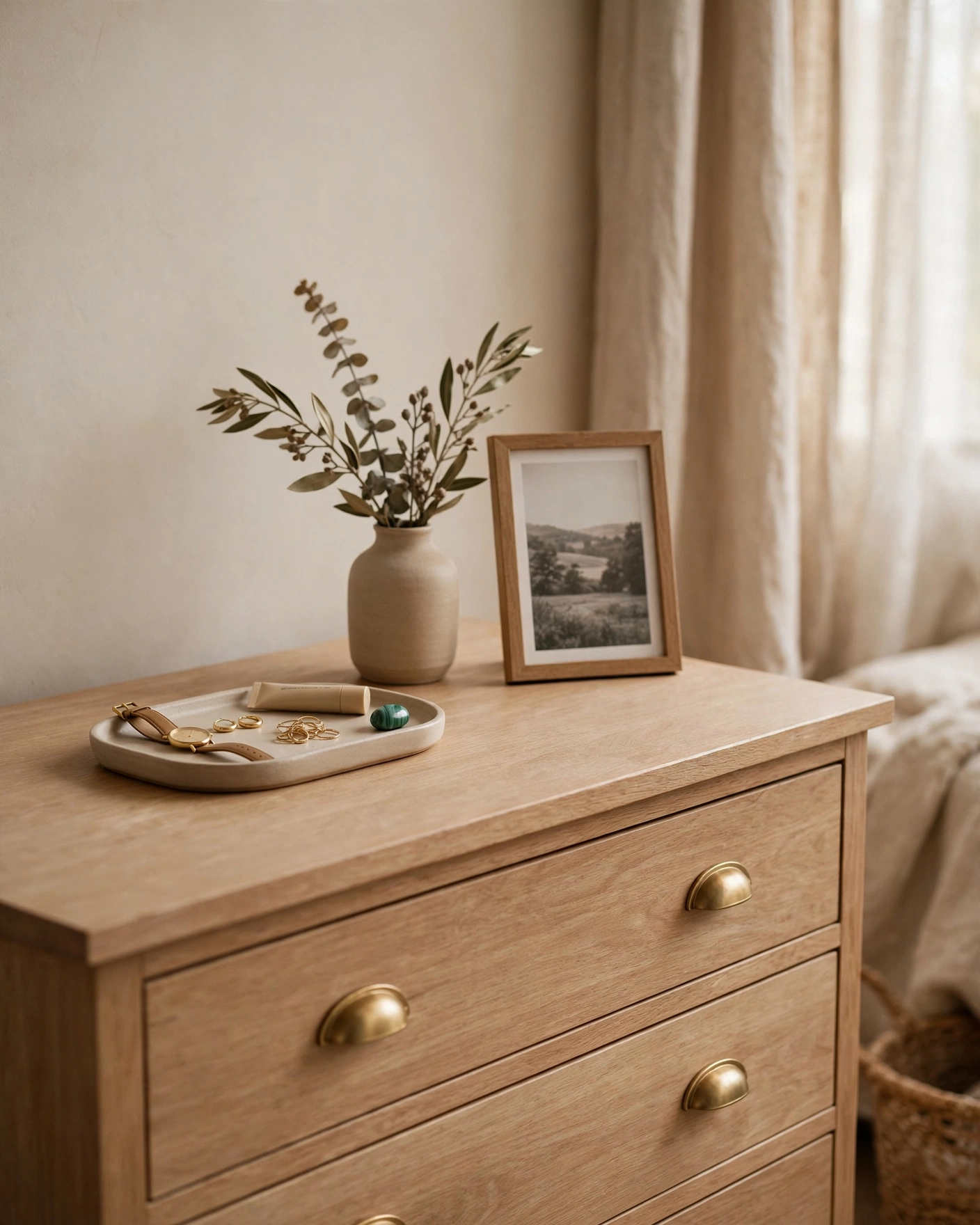
A dresser can become a useful styling surface without turning into a display shelf for every accessory you own.
Start with a clear surface, then add a small tray for daily essentials, a lamp or vase if space permits, and perhaps one framed photograph. Use drawer organizers to keep smaller items accessible without leaving them scattered across the top.
Leave some empty space. It makes the objects you choose to display easier to appreciate and the surface easier to clean.
Try this: Keep daily essentials together on one tray and store occasional-use items inside the dresser.
27. Finish With a Consistent Bedroom Scent and Evening Routine
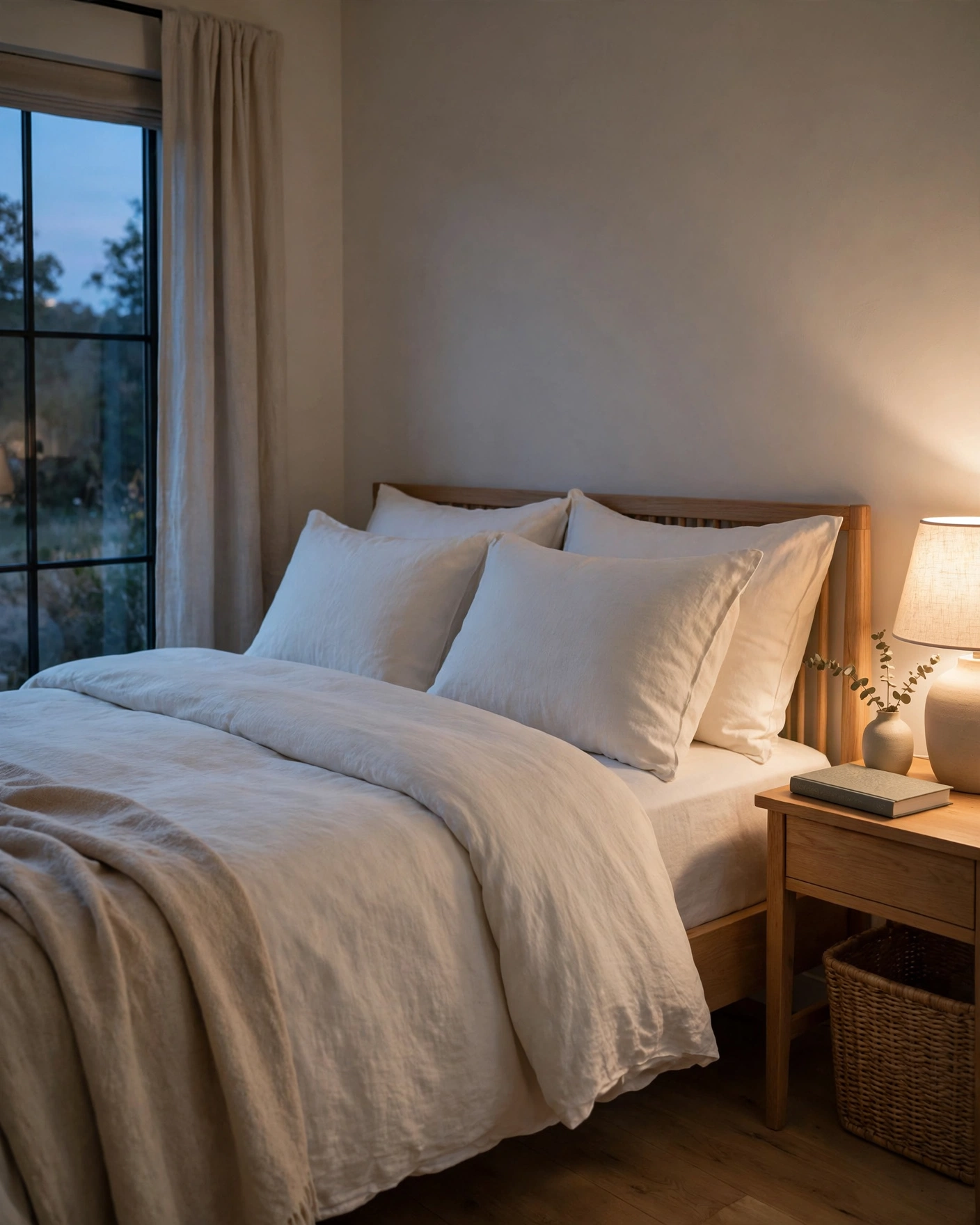
A bedroom’s atmosphere isn’t only visual. Fresh bedding, good ventilation, comfortable temperatures, and a simple evening routine can make the space feel more inviting.
If you enjoy fragrance, consider a lightly scented linen spray used according to its label, or another suitable product that fits your preferences. Keep fragrances away from sensitive sleepers, pets, and anyone who may react to them. Never use a product on bedding unless it is intended for that purpose.
You can also create a relaxing routine by dimming the lights, putting away your phone, and keeping a book or journal beside the bed.
Try this: Choose one small habit that makes the room feel ready for rest, such as straightening the duvet, clearing the nightstand, or switching to softer lighting.
How to Make Your Bedroom Feel Expensive on a Budget
You don’t have to implement all 27 ideas at once. Start with the changes that will have the biggest effect on your room and the ones you can comfortably afford.
A practical order is:
- Declutter first. Clear the floor, nightstands, and dresser top before buying new decor.
- Refresh the bed. Wash your bedding, arrange the pillows, and add a throw if you need more texture.
- Improve the lighting. A pair of suitable bedside lamps or a better-positioned light source can change the atmosphere considerably.
- Add one substantial textile. Consider a properly sized rug, lined curtains, or quality pillow covers.
- Introduce a natural material. Wood, woven fabric, or ceramic can add warmth without a major renovation.
- Finish with personal details. Artwork, a plant, or a meaningful object makes the room feel like yours.
Before buying anything, look at what you already own. Rearranging furniture, changing the placement of artwork, and removing unnecessary objects can make a noticeable difference for little or no money.
Frequently Asked Questions
How can I make my bedroom look expensive without spending a lot?
Start with a tidy layout, coordinated bedding, warm lighting, and a restrained color palette. Upgrade one or two visible details rather than replacing all your furniture. Well-maintained, appropriately sized pieces often look better than an expensive room filled with too many accessories.
What colors make a bedroom feel cozy?
Warm white, cream, beige, taupe, muted brown, terracotta, sage, and dusty blue can all create a cozy atmosphere. The best combination depends on your natural light, flooring, furniture, and personal preferences.
How do I make a small bedroom look more luxurious?
Use appropriately scaled furniture, keep walkways clear, layer textiles, and avoid overcrowding surfaces. Curtains hung higher where practical, a well-positioned mirror, and carefully chosen lighting can also make a small bedroom feel more open and finished.
What bedding looks most luxurious?
Bedding that looks smooth, comfortable, and well-fitted usually creates a polished effect. Choose breathable fabrics that suit your preferences and climate, then add a few complementary layers. Expensive labels are not necessary.
How can I make my bedroom feel cozy at night?
Use comfortable bedding, reduce unnecessary clutter, and combine suitable light sources rather than relying only on bright overhead lighting. Keep the room at a comfortable temperature and choose an evening routine that helps you unwind.
What should I buy first when decorating a bedroom?
Begin with the bed and its bedding because they occupy a large part of the room visually. Next, address lighting and window treatments. Add rugs, artwork, and decorative accents after the essential layout and comfort needs are met.
Final Thoughts
A beautiful bedroom isn’t about buying the most expensive furniture or following every new decor trend. It’s about making thoughtful choices that work together.
Start with comfortable bedding, introduce a few natural textures, use lighting that suits your routine, and give every item a purpose. Whether you try one idea or gradually work through all 27, small changes can help your bedroom feel more comfortable, polished, and personal.
Save this guide for your next bedroom refresh, and explore more home decor and organization ideas on Mivique.